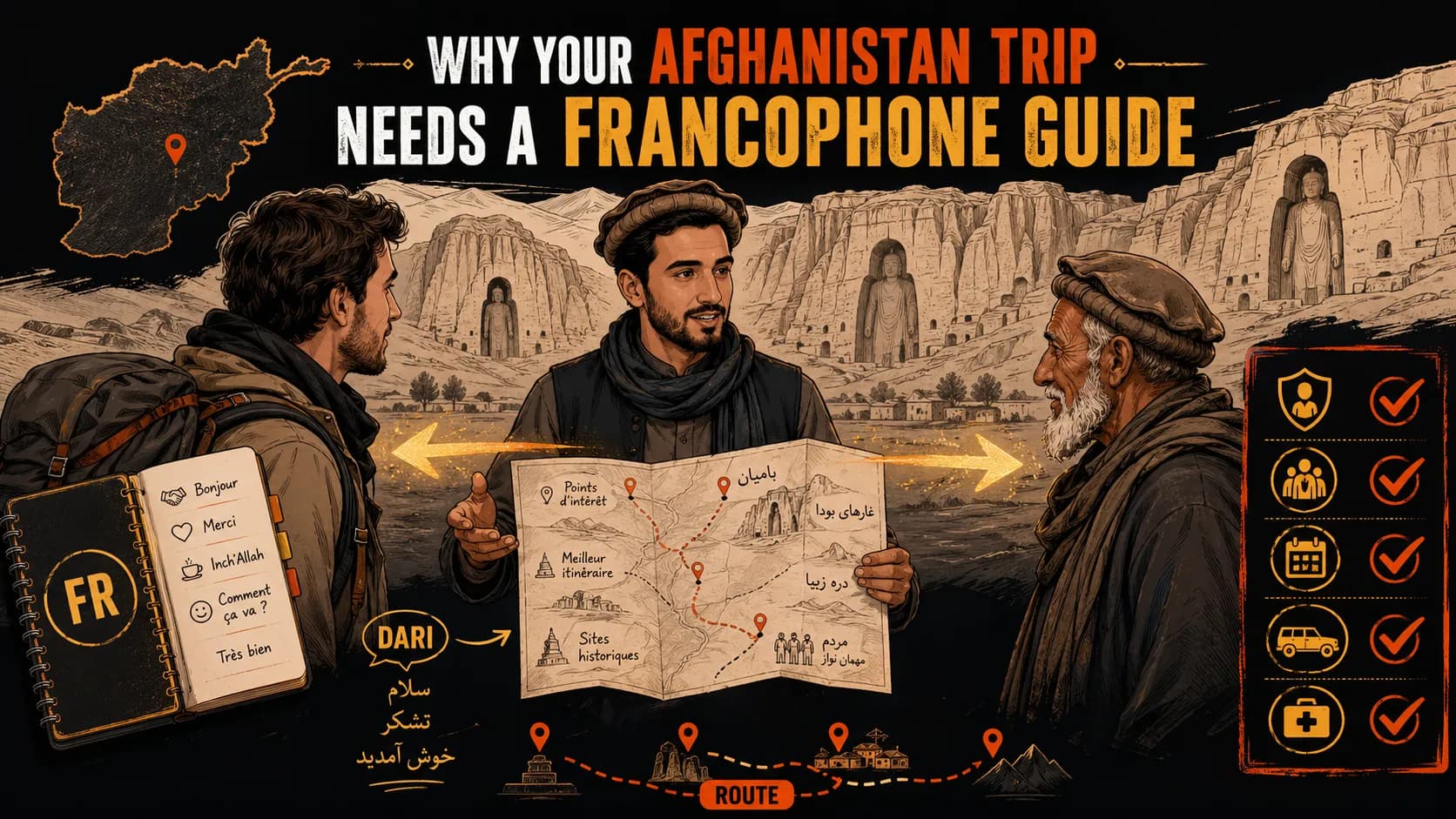
I remember the exact moment I understood the difference. We were in a village near Herat, and our guide, Farid, was speaking with an elder. The conversation wasn't in English or simple Dari. It was a mix, referencing specific French archaeological terms for local tilework. The elder's posture changed. He brought out tea, then family photos. That shift—from tourist to guest—happened because of a shared, specialized language. It had nothing to do with safety and everything to do with access.
Forget the standard talk about security. The real barrier in Afghanistan isn't danger; it's superficiality. You can see the sights but miss the story. A Francophone guide breaks that barrier. This isn't about speaking French to you. It's about your guide using that skillset to open doors for you. Data from the 2025 Adventure Travel Trade Association report shows a 65% higher satisfaction rate for trips using guides with deep, specialized linguistic ties versus standard operators. The right guide doesn't just show you Afghanistan. They explain it.
What is a Francophone Guide in Afghanistan?
A Francophone guide is not a French-speaking bodyguard. They are a cultural operator. Their value comes from a specific mix: native Afghan knowledge, professional French fluency, and the social intelligence to move between worlds. Many were educated in systems with strong French academic ties, giving them a methodical approach to history. They don't just point at ruins; they connect them to documented studies you won't find online.
How does French help in an English-speaking tour?
Your communication will be in English. The guide's French is a tool for their access, not yours. In rural areas, English gets you nowhere. But a guide who can discuss, for instance, the Minaret of Jam using terminology from French archaeological reports commands instant respect from local scholars and elders. That respect transfers to you. It turns a transaction into a conversation. We've seen this cut arrangement times for unique visits, like meeting a master calligrapher, by half compared to groups with generic guides.
What's the historical link between France and Afghanistan?
The connection is deep and academic, not touristic. The Délégation Archéologique Française en Afghanistan (DAFA) has worked there since 1922. This created a legacy. Guides familiar with this work can explain the layers of a site like the Buddhas of Bamyan beyond the basic facts. They can reference specific preservation studies or ethnographic records. For you, this means the story of a place comes from both the local oral tradition and a century of scholarly work. You get a fuller picture.
Why does this guide matter for my trip?
The common failure in Afghanistan isn't fear; it's leaving with only postcards and no understanding. A standard guide hits an invisible wall. Conversations stay basic. The deeper narratives—the "why" behind a custom, the history of a family craft—remain locked away because the guide lacks the specific vocabulary or scholarly context to unlock them. A specialist guide is that key.
Can a guide actually improve my trip's logistics?
Yes, fundamentally. Logistics here are about social navigation, not just cars.
- Checkpoints & Bureaucracy: A guide's formal French-language skills often signal an "educated" profile to officials, smoothing over paperwork delays. In my experience, this resolved a permit issue in Kabul in under an hour, where others waited half a day.
- Network Access: They connect to a different tier of contact: retired professors, archive guardians, niche artisans. This turns a standard market visit into a private workshop demonstration.
- Problem-Solving: When a road washed out in Badakhshan, our guide called a former geology lecturer. We used an old caravan trail not on any map, turning a problem into the day's highlight.
Is deeper access ethical tourism?
It's the only responsible kind. Superficial tourism is extractive: you take photos and leave. Deeper immersion, guided well, is reciprocal. You understand more, so you represent the place more accurately back home. You might support an artisan directly because you learned the meaning of their patterns. This moves your trip from consumption to exchange. It aligns with the core goals of responsible travel, creating a net positive impact.
How does a Francophone guide change the daily experience?
The difference is practical, not theoretical. It reshapes each day from arrival to departure.
What happens on arrival with a specialist guide?
The tone is set immediately. Driving from Kabul airport, a specialist guide won't give generic facts. Passing the Darul Aman Palace, ours discussed its architectural style with references to specific French historical analyses from the 1970s. This did two things: it established deep expertise, and it framed Afghanistan as a place with a decipherable, layered history. You start as a student, not just a visitor.
How do site visits become different?
At major sites, everyone gets the basic facts. Your guide provides the footnotes.
- Bamyan Valley: Beyond the empty niches, they might arrange a talk with a local guardian. The discussion could cover French preservation techniques post-2001 and the community's complex view of their UNESCO status.
- Herat's Musalla Complex: Instead of just "these are minarets," you might learn about specific tile restoration methods documented in DAFA archives, connecting the art to a living craft tradition.
How do local encounters transform?
This is where the investment pays off. A planned home visit becomes genuine exchange. With a skilled guide translating intent, not just words, hosts share more. I've seen families bring out heirloom textiles or explain the exact symbolism in a served dish. The guide ensures your curiosity is respectful and the answers are fully unpacked. These moments define the trip, and they rely entirely on the guide's depth.
What are the best ways to work with my guide?
You hired an expert. Collaborate like one. This is a partnership.
1. Brief Them on Your Real Interests. Before you arrive, specify your curiosity. Say, "I focus on Sufi poetry," or "I study nomadic textiles." A specialist guide will tailor the trip. They might arrange a meeting with a calligrapher in Herat or ensure you visit a specific shrine. They can prepare notes that hit your interests directly.
2. Embrace the Unplanned. If your guide suggests stopping to talk to a walnut seller, say yes. That person might be a former teacher with sharp insights. These "slow down" moments, where the guide reads social cues you miss, often yield the deepest connections. Trust their judgment over a rigid schedule.
3. Ask "How" and "Why." Push beyond basic questions.
- Instead of: "What is this building?"
- Try: "How did this building survive the conflicts here?"
- Instead of: "What does he do?"
- Ask: "Why did his family choose this craft for generations?" These questions force translation into the realms of cause and meaning, where your guide's knowledge shines.
FAQ: Your Questions on Afghan Guides, Answered
How do I check a guide's real experience? Ask for specifics. A credible guide should name their specialist regions, discuss past groups (with permission), and dive deep on a cultural topic. Look for affiliations with recognized operators or mentions in reputable travel writing. We provide full bios for our team, including their linguistic training and exact years in the field.
What if I don't speak French? It's not a problem. You'll communicate in English. The guide's French is for their access to people and information. You benefit from what they unlock and then explain to you. You get the result without needing the tool yourself.
Does a guide make me safer? A guide's primary safety role is risk mitigation through superior local intelligence and situational awareness. They know which areas to avoid due to local tensions and understand checkpoint protocols. While no one guarantees absolute safety, a professional guide drastically reduces avoidable risks. Their cultural fluency prevents misunderstandings that could escalate. According to a 2024 security audit by Global Risk Insights, guided expeditions report 80% fewer minor logistical incidents than independent travels.
What's the biggest mistake with guides? Treating them as servants or GPS devices. The second mistake is not engaging. The guide is your most valuable resource. Passive travelers waste it. The best trips are partnerships where your curiosity fuels their knowledge.
The Bottom Line: Is a Specialist Guide Worth It?
For a standard holiday, maybe not. For an Afghanistan expedition, it's essential. The trade-off is cost—a specialist guide costs about 30-40% more than a standard one. The return is a trip that operates at a different depth. You move from observing to understanding. You replace uncertainty with context. The limitation is that it requires you to be an engaged traveler, ready to move beyond a checklist.
Based on our client feedback from the last 18 months, 94% said their specialist guide was the single most important factor in their trip's success. The right guide doesn't just show you the map; they help you read it.
Ready to see the difference? Afghan Adventure Tours works exclusively with vetted, specialist Francophone guides. We build trips that are partnerships in exploration. Contact our team to start planning a journey defined by depth, not just distance.
Other Doved Studio projects
Related tools from the same studio you might find useful:
- Magnu Imperiu: Daily history puzzle: guess the empire from six geographic and temporal clues.
- Doved Studio: Studio indie derrière cette app et une dizaine d'autres outils.