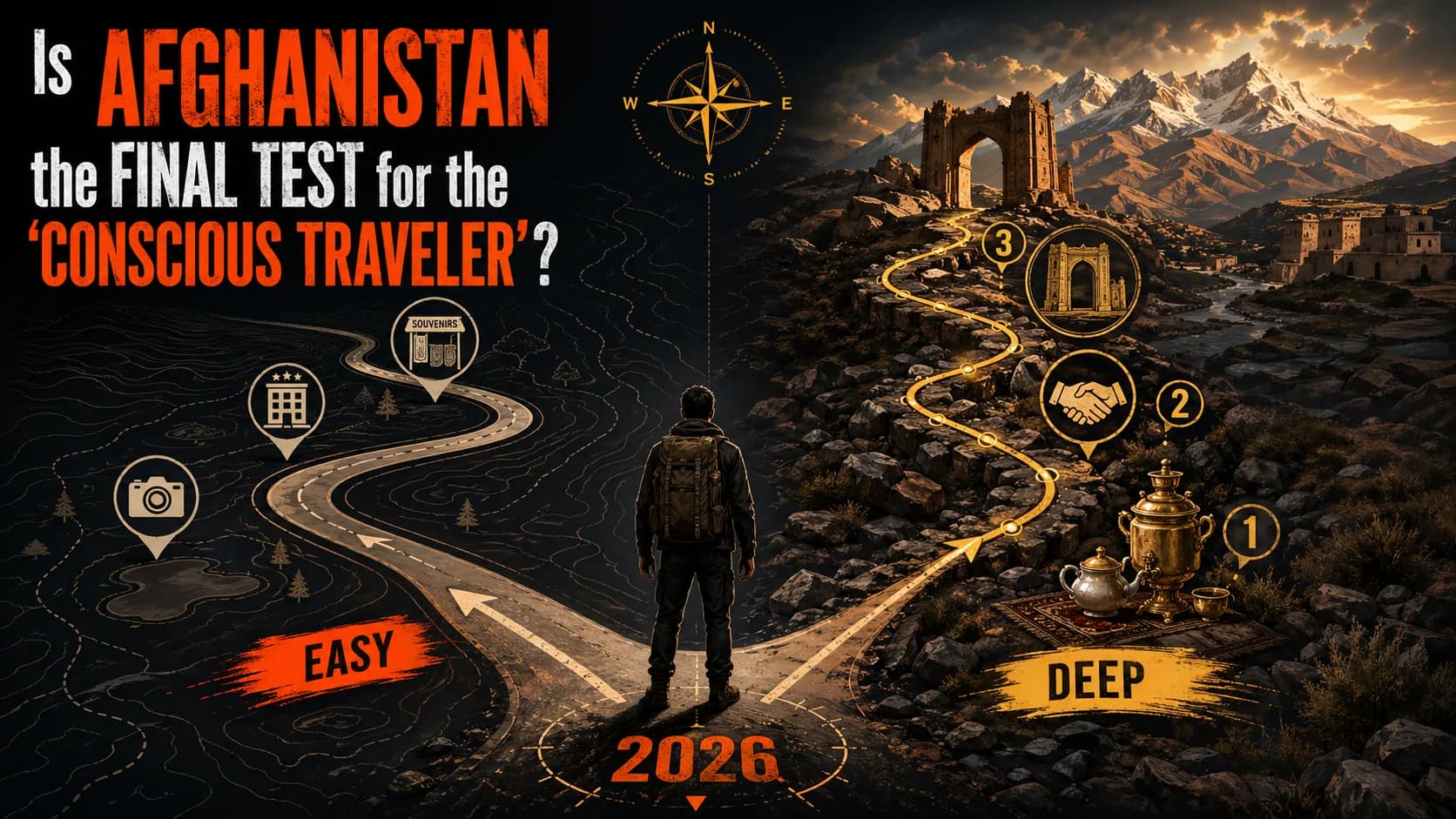
In 2026, the travel industry is buzzing with a single phrase: conscious travel. It’s the new gold standard, the metric by which every Instagram post and blog entry is judged. But what happens when this well-intentioned philosophy meets a destination that doesn’t fit the brochure? What happens when the path to cultural immersion is paved with complex history, raw authenticity, and the kind of logistical challenges that demand more than just good intentions?
For the traveler who has ticked off the eco-lodges and voluntourism projects, who craves a connection that feels earned rather than curated, there may be no greater proving ground than Afghanistan. This isn't about ticking a box on an extreme tourism bingo card. It’s a direct confrontation with the core tenets of conscious travel. Can you practice deep cultural respect in a place whose recent narrative has been defined by conflict? Can your visit be a net positive in a fragile economy? Is it possible to be an observer without being a voyeur? An Afghanistan expedition strips the concept of conscious travel down to its bare essentials, asking you to define what you truly mean by "ethical," "immersive," and "impactful." This is where the trend meets the test.
What Conscious Travel Really Means in 2026
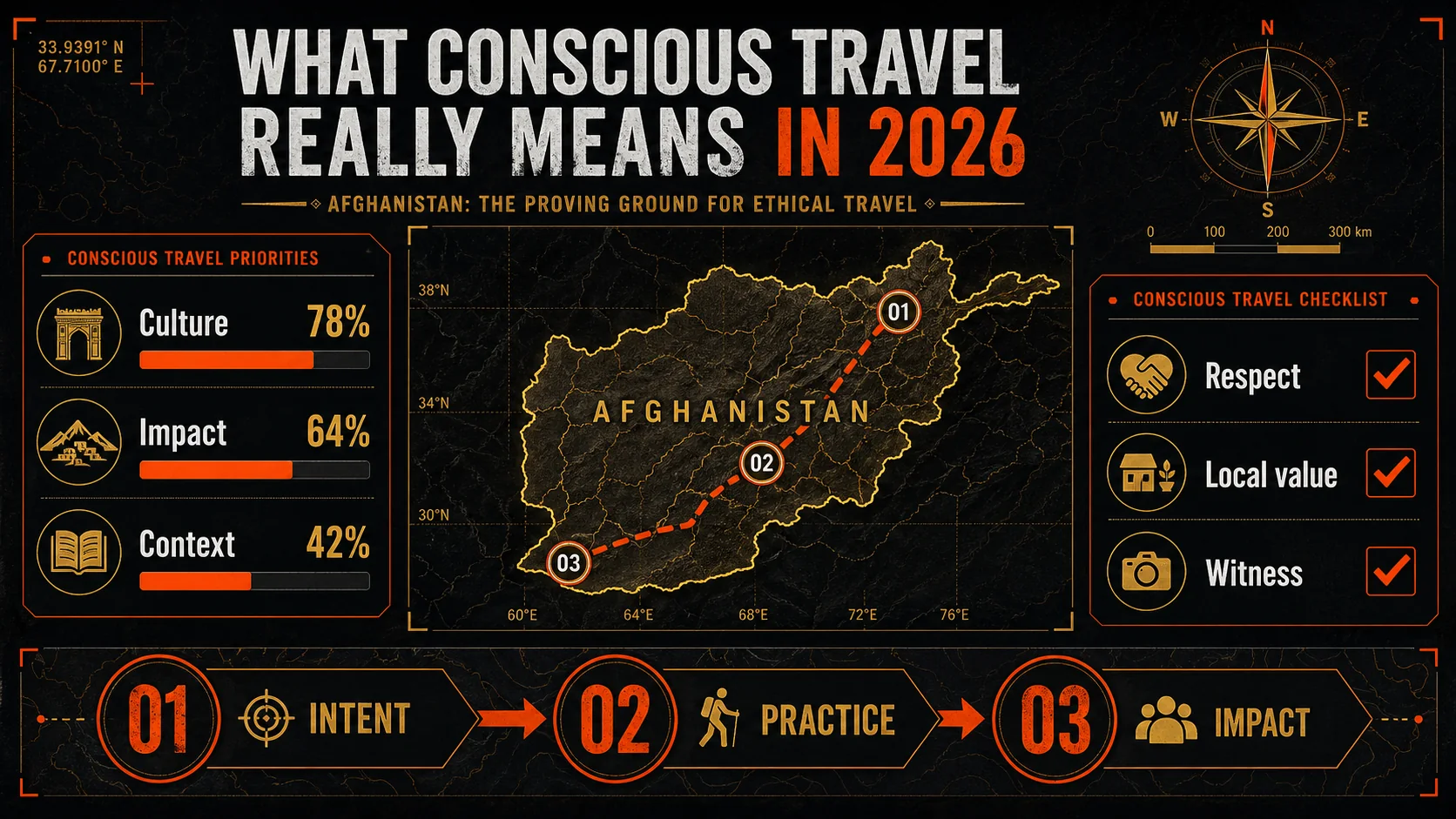
Forget the buzzwords for a moment. In 2026, conscious travel has evolved from a niche preference to a mainstream expectation, driven by a generation of travelers who are digitally native, politically aware, and deeply skeptical of superficial experiences. According to the Adventure Travel Trade Association's latest industry report, 78% of surveyed adventure travelers now rank "meaningful cultural exchange" above "luxury accommodation" or "relaxation" as a primary trip motivator. This isn't just about buying local crafts; it's a desire to understand context, history, and daily life.
But here’s where it gets messy. The same report notes a 42% increase in interest in what it cautiously terms "post-conflict and challenging destinations." There's a clear, growing appetite to move beyond the sanitized and into the authentic, even when that authenticity is complex. This creates a critical tension at the heart of modern conscious travel. The desire for deep, unfiltered experience collides with the ethical imperative to "do no harm." In a picturesque Italian village, the formula is straightforward. In a place like Afghanistan, the equation has multiple unknown variables.
Let's break down the 2026 conscious traveler's checklist and see how it translates:
| Conscious Travel Principle | Standard Destination Application | Afghan Expedition Application |
|---|---|---|
| Cultural Respect & Exchange | Learning basic phrases, dressing modestly, attending a cooking class. | Understanding complex tribal codes, the significance of hospitality (mehmastia), and engaging in conversations that navigate decades of nuanced history. It's detailed in our deeper dive into Afghan culture and traditions. |
| Economic Benefit to Locals | Staying in family-run guesthouses, hiring local guides, eating at non-chain restaurants. | Ensuring your entire logistical chain—from drivers to cooks to fixers—is locally employed and fairly compensated, directly injecting capital into communities that see little formal tourism. |
| Minimal Environmental Footprint | Using reusable water bottles, choosing direct flights, staying on marked trails. | Operating in a region with limited waste management infrastructure, making every piece of packaging a responsibility. It's about leaving absolutely no trace, physically or politically. |
| Historical & Contextual Awareness | Reading a guidebook before visiting a museum or ruin. | Grappling with the layered history of the Silk Road, Buddhist heritage, and 20th/21st-century conflicts simultaneously. Visiting the Bamiyan Valley isn't just seeing empty niches; it's understanding loss, resilience, and identity. |
The shift is from passive consumption to active participation. The conscious traveler in 2026 is expected to be a student, a guest, and a respectful economic participant. But this framework assumes a stable host environment. Afghanistan removes that assumption, demanding a higher level of personal accountability. Your consciousness isn't just about what you do; it's about how you think, react, and interpret in real-time.
Why Generic Conscious Travel Formulas Fail Here
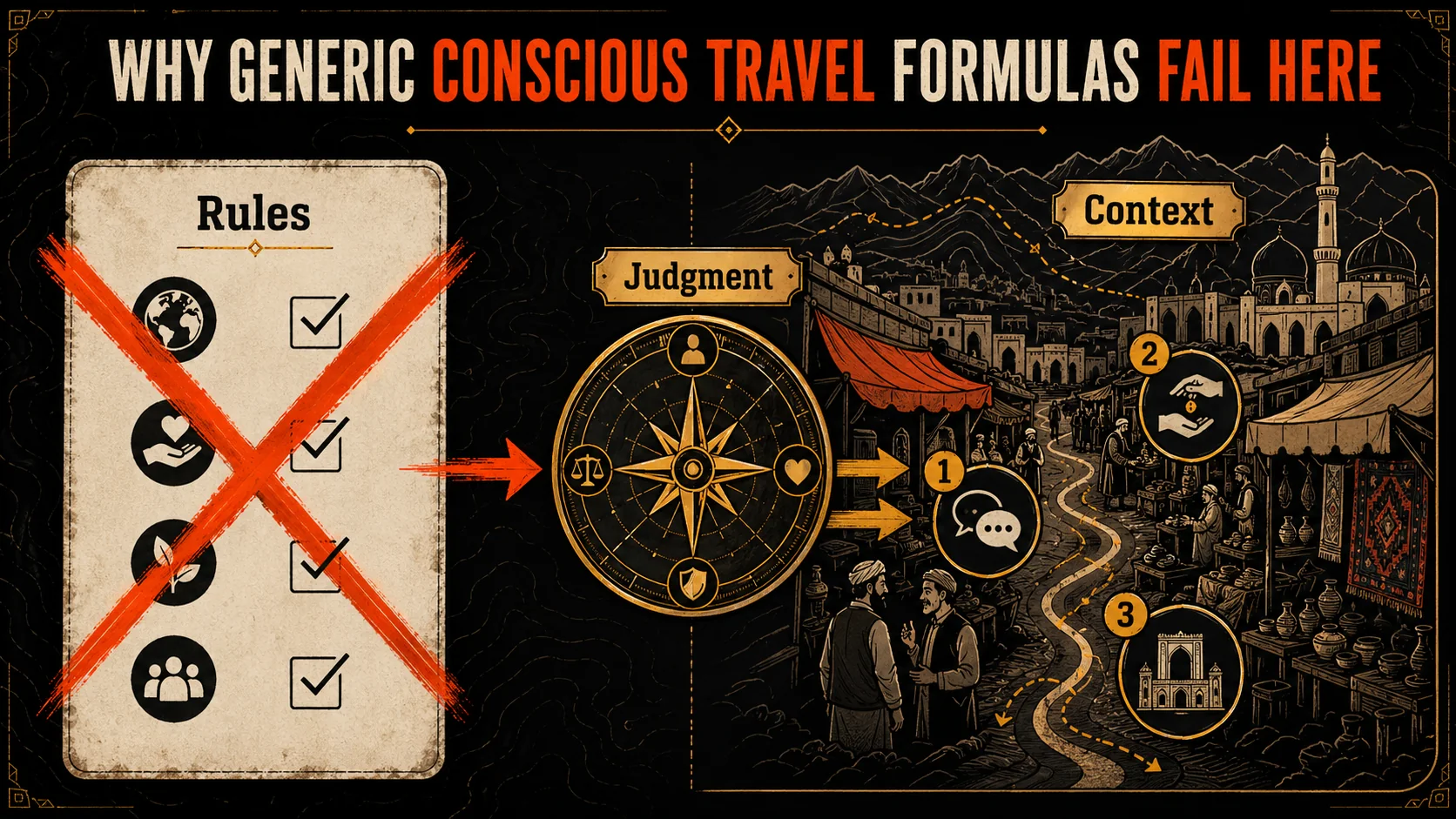
You can follow every conscious travel blog tip to the letter and still fail miserably in Afghanistan. The problem isn't the intent; it's the application. Standard ethical tourism playbooks are built for contexts with established tourist infrastructures, clear cultural demarcations for visitors, and a baseline of political stability. Afghanistan has none of these. Applying a one-size-fits-all approach here isn't just ineffective—it can be counterproductive, and at times, disrespectful.
First, there's the problem of the "savior complex." Conscious travel often overlaps with voluntourism, the idea that travelers should "give back." In Afghanistan, arriving with a plan to "fix" or "teach" something based on a superficial understanding is a profound error. The local engineers, doctors, teachers, and entrepreneurs you'll meet are often far more educated and resourceful than the typical tourist. The conscious approach here is inverted: you are not the savior, you are the student. Your role is to listen, to learn, and through your presence and spending, to provide economic validation for their resilience. The benefit is mutual, but it is not paternalistic.
Second, simplified cultural respect meets complex social reality. You may know to dress modestly. But do you understand the different meanings of a handshake, or when to make eye contact? You know to ask permission before taking photos. But do you understand the weight a camera carries in a region where imagery has been used for propaganda for generations? This isn't about memorizing rules; it's about developing a sensitivity that allows you to read a room, a street, a conversation. It's the difference between following a script and engaging in a dialogue. A key part of this is understanding daily life, which is deeply tied to Afghan cuisine and the social rituals around food.
Finally, and most critically, is the illusion of low impact. In a stable country, you can convince yourself your tourist dollar is a clean, positive force. In Afghanistan, your presence is never neutral. You are a political statement simply by being there. The conscious traveler must confront this head-on. Are you contributing to a narrative of normalization? Of exploitation? Of hope? Your interactions, your questions, your very curiosity become part of the local story. This requires a level of self-awareness and humility that goes far beyond choosing a carbon-offset flight. It demands that you constantly ask: "What story am I telling, both to myself and to the people I meet?"
How to Practice Conscious Travel in Afghanistan: A Step-by-Step Method
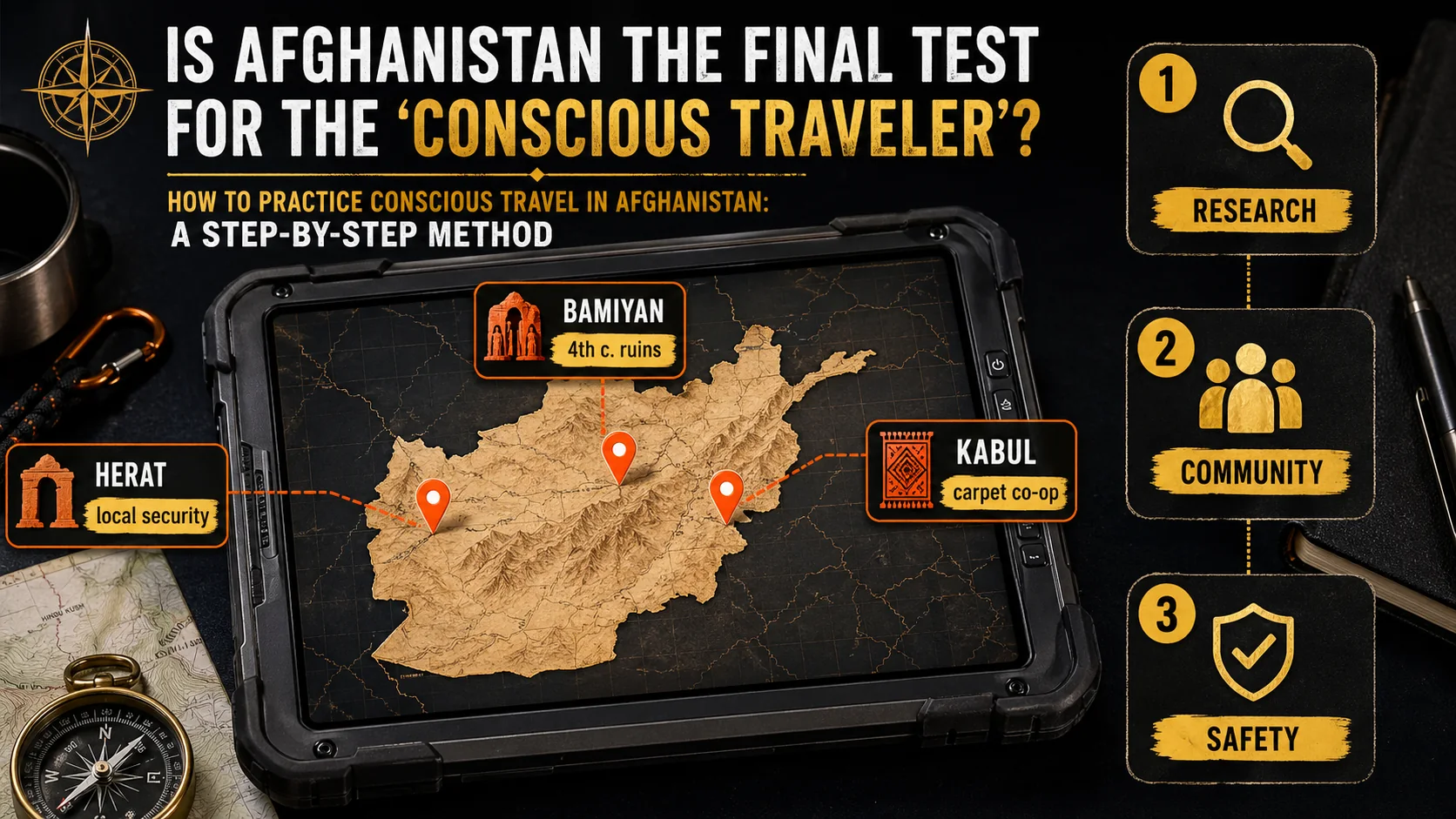
This is the operational manual they don't give you in the glossy brochures. Traveling consciously in Afghanistan is a proactive, continuous practice, not a passive state of mind. It begins long before you board the plane and continues long after you return home. Based on fifteen years of leading groups through this landscape, here is the method that moves theory into practice.
Step 1: Pre-Trip Deconstruction: Unlearn Before You Learn
Your first task is to dismantle the single-story narrative. For two decades, Western media has presented Afghanistan almost exclusively through a lens of war, terrorism, and tragedy. To travel consciously, you must actively seek out the other 99% of the story.
- The Tool: Curate a counter-narrative media diet. Don't just read news headlines. Seek out Afghan literature (Khaled Hosseini is a start, but dig deeper into contemporary poets like Partaw Naderi). Watch documentaries focused on archaeology, like "The Buddhas of Bamiyan," or on daily life. Listen to Afghan music—from traditional rubab to modern pop. Follow Afghan photographers and journalists on social media for ground-level perspectives.
- The Action: Create a "knowledge map." On one side, list everything you think you know about Afghanistan, citing the source (e.g., "dangerous - CNN, 2021"). On the other, start a list of what you discover about its history as a Silk Road hub, its diverse ethnic tapestry (Pashtun, Tajik, Hazara, Uzbek), its poetic traditions, and its agricultural heritage. Watch the two columns diverge. This exercise builds the intellectual humility you'll need on the ground.
Step 2: The Economics of Presence: Follow the Money Trail
Conscious travel is economic travel. In Afghanistan, where formal tourism infrastructure is sparse, ensuring your money reaches the right hands is your most direct lever for positive impact.
- The Tool: Scrutinize your operator's supply chain. Don't just ask if they use local staff; ask how. Who owns the vehicles? Are the guides from the regions you're visiting? Is the food sourced from local markets? A legitimate operator will be transparent about this. For example, our expeditions are built on a network of local partners—from the Pamiri guide in the Wakhan Corridor to the Hazara family that hosts us in Bamiyan. The goal is a closed economic loop within the community.
- The Action: Plan to spend cash locally, but thoughtfully. Bring crisp, newer US dollar bills (the primary hard currency) for major expenses. But also exchange for Afghanis for small purchases: carpets from a co-operative, embroidery from a women's collective, or simply endless rounds of tea. Ask your guide about reputable community initiatives. Your purchase is not a souvenir; it's a direct investment in a craftsperson's livelihood and a cultural tradition's survival.
Step 3: Cultural Engagement Beyond the Transaction
This is the heart of the test. Moving from being a consumer of "culture" to a participant in human exchange.
- The Tool: Your guide is your cultural translator, not just a logistics manager. A francophone guide with deep local roots, like the ones we employ, does more than translate language. They translate context. They explain why a question might be awkward, why a gesture is significant, and how to accept the relentless hospitality without causing offense. They facilitate introductions that go beyond the commercial.
- The Action: Master the art of the guest. In Afghanistan, you will be invited for tea—constantly. Accept. Sit on the floor. Drink the three obligatory cups. Practice the phrases for "thank you" (tashakur) and "delicious" (khush taghme). Let the silence sit. Conversation will flow. Ask about family, about poetry, about the land. Avoid leading questions about politics or conflict; let those topics emerge organically if your host wishes to go there. This slow, respectful exchange is the antithesis of tourist spectacle. It is the core of conscious travel here. To engage more deeply, understanding the social framework is essential, which is why we explore Afghan cultural norms and practices in detail.
Step 4: The Photography Ethos: Consent, Dignity, and Context
Your camera is the most potent, and potentially damaging, tool you carry. The standard travel photography rulebook is insufficient.
- The Tool: A small, discreet camera and a massive amount of restraint. Before you raise your lens, ask yourself: "Would I take this photo of a stranger in my hometown?" Then ask a second, more important question: "Why am I taking this photo?"
- The Action: Implement a strict consent protocol. For portraits, explicit, verbal consent is non-negotiable. Use your guide. Show the subject the photo afterward. For wider street scenes, be hyper-aware. Are you capturing someone's poverty as your "authentic" backdrop? Are you photographing children without their guardians' clear permission? When you do take photos, go beyond the "exotic." Photograph the engineer fixing a generator, the shopkeeper laughing with a friend, the intricate pattern on a door. Later, caption them with the story and the person's name (with permission), not just the location. You are not documenting "the other"; you are introducing individuals.
Step 5: Security as a Shared Responsibility, Not a Barrier
Security is the elephant in the room for conscious travel in Afghanistan. The key is to reframe it: professional security isn't a wall that isolates you from the "real" Afghanistan; it's the foundation that makes safe, respectful engagement possible.
- The Tool: A professional, locally-informed security team. This isn't about armed guards creating a bubble. It's about risk assessment experts who understand the granular, day-to-day realities of the regions you visit. They liaise with local elders, monitor situations in real time, and ensure your route is viable and respectful of local sensitivities.
- The Action: Your consciousness here means active participation in your own safety. Listen to briefings. Adhere to protocols regarding dress, movement, and communication. Understand that these rules aren't about control; they are about ensuring your safety and the safety of those hosting you. Your secure presence allows for the relaxed, meaningful interactions you seek. It is the prerequisite for everything else. For a thorough breakdown of this balance, our foundational guide on safety and risk assessment for travel in Afghanistan is critical reading.
Step 6: Post-Trip Integration: The Long-Term Commitment
The conscious journey doesn't end at departure. How you process and share your experience completes the ethical loop.
- The Tool: Your notes, your photos (curated ethically), and your voice.
- The Action: When you share your story—on a blog, with friends, on social media—challenge the monolithic narrative. Don't just talk about "Afghanistan." Talk about Najib the guide from Panjshir, about the taste of ashak dumplings in a Kabul home, about the sound of the rubab in a Herat courtyard. Talk about complexity, beauty, and normalcy alongside the challenges. Correct misconceptions when you hear them. Stay in touch with the people you met, if appropriate. Consider supporting an Afghan-led educational or cultural NGO you learned about. Your ongoing engagement turns a trip into a relationship.
Putting Conscious Principles to Work in the Field: Three Proving Grounds
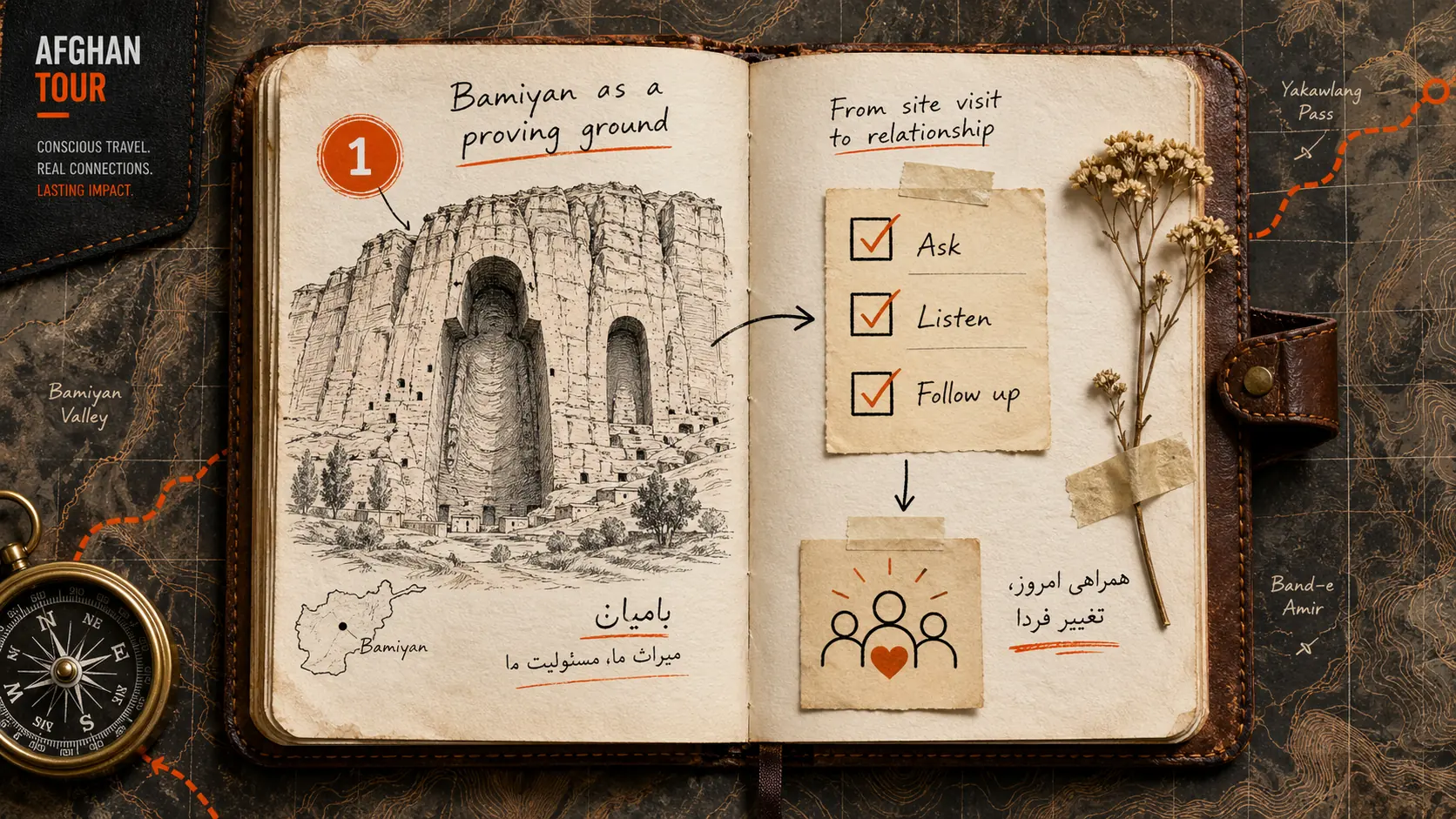
Theory is one thing. Practice is another. Let's apply this conscious travel framework to three iconic moments on an Afghan expedition. This is where your philosophy gets its boots dirty.
Proving Ground 1: The Bamiyan Valley. You stand before the empty niches where the giant Buddhas stood for 1,500 years. The standard tourist reaction is awe at the scale, sadness at the destruction. The conscious traveler's reaction is more layered. You've read about the Silk Road. You understand this was a global Buddhist center, not an isolated monument. Your guide introduces you to a local historian, a Hazara man whose family has lived here for generations. He doesn't just talk about 2001; he talks about Xuanzang the Chinese pilgrim in 630 AD, about the community's current efforts to preserve the fragile murals in the surrounding caves, and about what the valley means for Hazara identity today. Your visit supports his work. Your questions show genuine interest beyond the headline. You leave not just having "seen" Bamiyan, but having connected with its living story. This is the depth explored in our complete guide to Bamiyan Valley.
Proving Ground 2: A Home Visit in Kabul. You are invited for lunch. The table groans with dishes: qabuli palau, mantu, banjan. The conscious move isn't just to eat. It's to ask about the recipes. Your host's eyes light up as she explains how her mother taught her to layer the rice for palau. You talk about saffron from Herat, raisins from Kandahar. The meal becomes a geography and history lesson. You offer to help clear plates, a gesture that is politely refused but appreciated. You've moved from consumer to honored guest, participating in the sacred ritual of mehmastia. The economic benefit of your visit is direct. The cultural exchange is profound and personal.
Proving Ground 3: The Rug Merchant's Shop. You're in the old bazaar. A merchant unrolls a stunning Turkoman carpet. The price is high. The easy, unconscious move is to haggle aggressively, treating it as a financial transaction. The conscious move is different. You ask about the symbols: what does this octagon mean? Who wove it? How long did it take? The merchant shifts from a salesman to a storyteller. He explains the patterns passed down through generations, the vegetable dyes, the months of work. You understand you're not just buying a floor covering; you're preserving a skill and supporting a family. The negotiation that follows is respectful of that value. You may still agree on a price, but the process has dignity.
Got Questions About Conscious Travel in Afghanistan? We've Got Answers
How do I know if I'm really ready for this kind of trip? If you're asking this question, you're on the right track. Readiness isn't about physical toughness; it's about mental and emotional preparation. Can you tolerate ambiguity? Are you comfortable not having all the answers? Are you willing to have your preconceptions challenged daily? If your primary goal is an adrenaline rush or bragging rights, you're not ready. If you're driven by a genuine curiosity to understand a profoundly misunderstood place and are prepared to be a humble guest, you might be.
What's the single biggest mistake conscious travelers make in Afghanistan? Assuming their presence is an uncomplicated good. The mistake is arriving with a savior complex or a checklist of "good deeds" to perform. The most impactful thing you can do is to arrive as a respectful, curious, and economically contributing guest. Listen more than you speak. Learn the context before you form opinions. Your positive impact is indirect: through ethical spending, through human connection, and through sharing a more nuanced story when you return home.
Can my visit actually make a difference to local people? Yes, but calibrate your expectations. You won't "change Afghanistan." But you can make a significant difference to specific individuals and families. Your fee pays the salary of your guide, driver, and cook for months. Your purchase from a women's weaving cooperative directly funds their autonomy. Your respectful engagement with a shopkeeper or a farmer validates their work and culture. The difference is micro, not macro—but in an economy with few alternatives, that micro-impact is vital.
How do I handle the obvious poverty and signs of past conflict I'll see? With respect and without objectification. Poverty is not a tourist attraction. Avoid taking intrusive photos of people in vulnerable situations. If you feel compelled to help, ask your guide about the most appropriate way. Often, the best response is to engage with people as individuals—buy a cup of tea from a street vendor, ask about their family, treat them with the dignity you would afford anyone. Acknowledge the resilience it takes to build a life amid challenges, rather than focusing solely on the hardship.
Ready to Take the Test?
The conscious travel trend of 2026 asks for more than a reusable water bottle. It asks for a commitment to depth, respect, and accountability in places where it matters most. Afghan Adventure Tours crafts expeditions that are designed to be this ultimate proving ground. We provide the secure framework, the deep local access, and the expert guidance that allows you to engage with Afghanistan not as a spectator, but as a conscious participant. Stop debating the theory and start practicing it. Claim your spot on the 2026 expedition and define what conscious travel truly means to you.
Other Doved Studio projects
Related tools from the same studio you might find useful:
- Magnu Imperiu: Daily history puzzle: guess the empire from six geographic and temporal clues.
- Doved Studio: Studio indie derrière cette app et une dizaine d'autres outils.