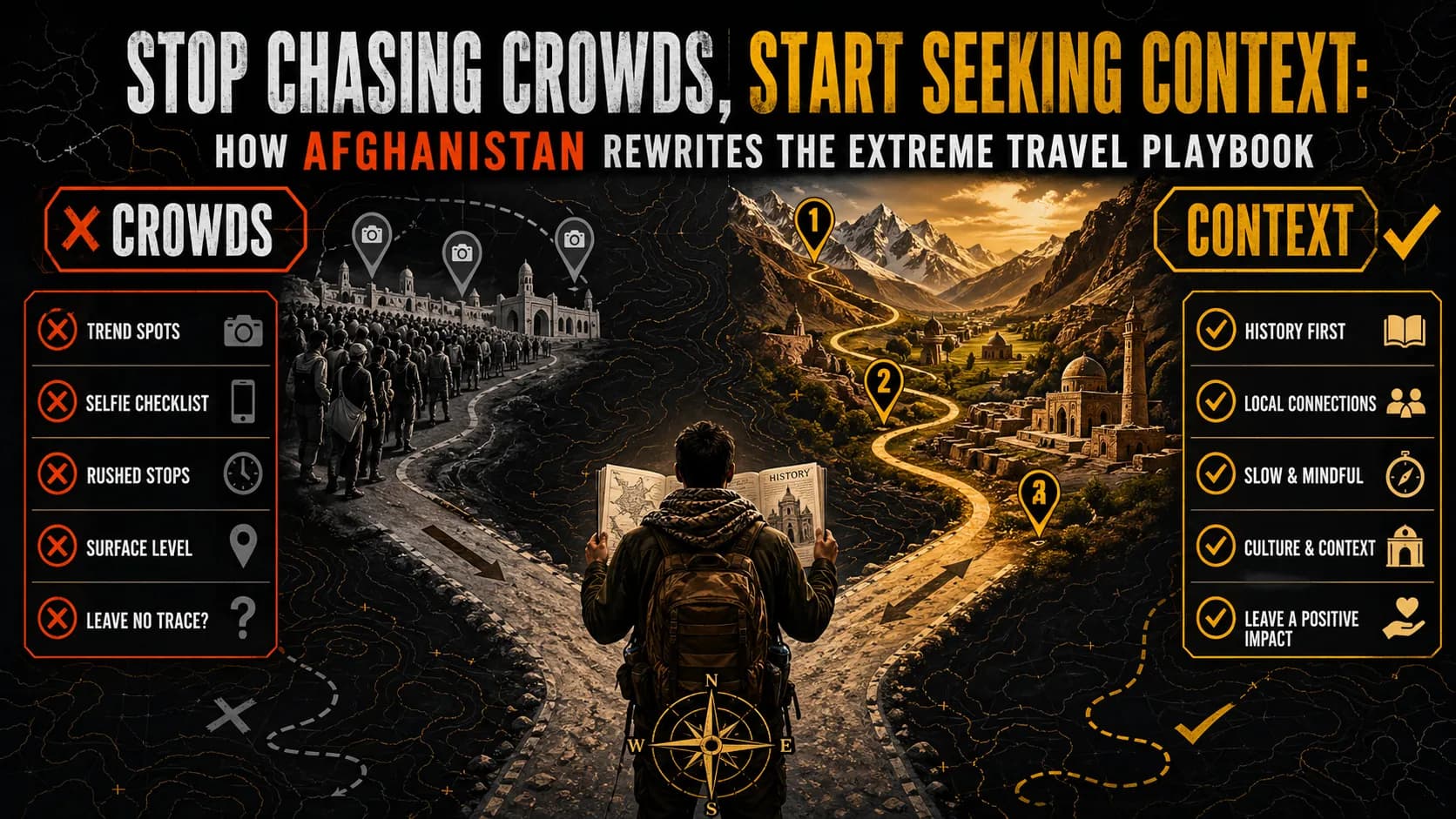
The Instagram feed is a graveyard of dead trends. A thousand identical photos of Machu Picchu at dawn, the same shot of a crowded Icelandic waterfall, another influencer posing in a gas mask in Chernobyl. The travel industry’s obsession with “extreme” has become predictable, a checklist of danger zones stripped of their soul. It’s not adventure; it’s performance art for an algorithm.
But a quiet rebellion is underway. A 2026 report from the Adventure Travel Trade Association found a 40% year-over-year increase in traveler demand for trips offering “deep historical and cultural context” over simple physical challenge. The question is no longer “Can I survive this?” but “Will I understand this?” This is the rise of conscious extreme tourism, and there is no better, more demanding, or more rewarding classroom for it than Afghanistan.
Forget what you think you know. This isn’t about ticking off a war zone. It’s about engaging with a narrative that has shaped empires, global politics, and human resilience for millennia. Our 10-day expedition isn’t designed to be the most dangerous trip you’ll ever take; it’s designed to be the most meaningful. It’s a masterclass in context, where every mountain pass, every cave, and every shared cup of tea is a page in a living history book. This is how Afghanistan rewrites the playbook, forcing you to trade spectacle for substance.
What Is Conscious Extreme Tourism?
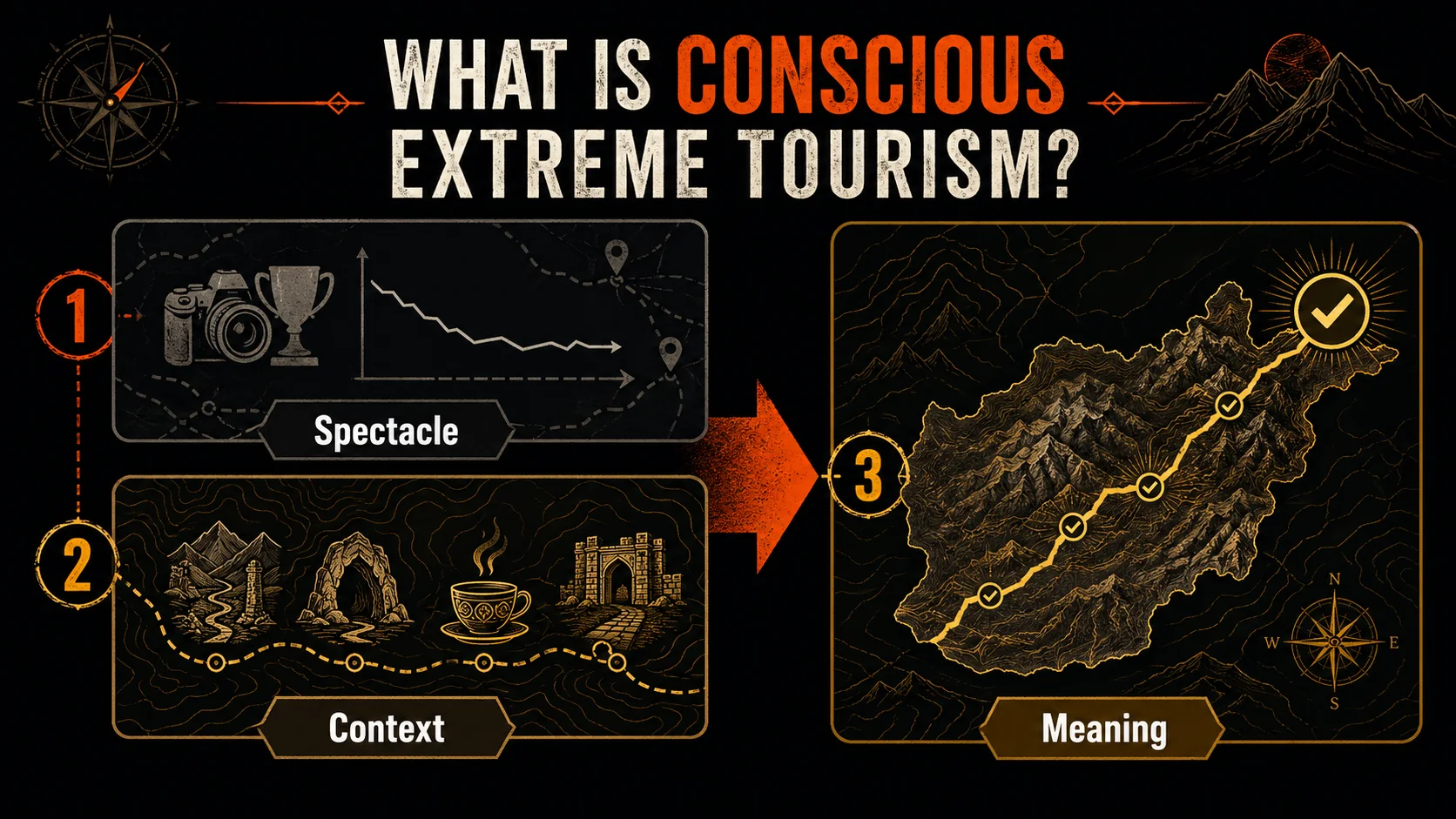
Let’s define our terms, because the industry has muddied them. Extreme tourism, at its worst, is transactional. You go somewhere difficult, you endure some hardship, you get a story (and photos) to prove your bravery. The location is a backdrop, its people are props, and its history is a Wikipedia entry you skim on the flight over.
Conscious extreme tourism flips this model. The difficulty of access isn’t the point; it’s the filter. It ensures that only those genuinely committed to understanding will make the journey. The “extreme” element shifts from the physical environment to the intellectual and emotional engagement required. You’re not just visiting a place; you’re attempting to comprehend a complex, layered reality.
Think of it as the difference between reading a headline and reading the book. A headline tells you “Conflict in Afghanistan.” The book—the lived experience on the ground—reveals the centuries of Silk Road trade, the clash of empires, the resilience of the Hazara in Bamyan, the strategic geology of Tora Bora, and the profound hospitality that persists through it all. This approach demands more from the traveler: more preparation, more humility, and more willingness to have your preconceptions dismantled.
| Traditional Extreme Tourism | Conscious Extreme Tourism | |
|---|---|---|
| Goal | Conquest, bragging rights, unique photos. | Comprehension, connection, personal transformation. |
| Focus | The destination as an obstacle. | The destination as a narrative. |
| Engagement | Superficial, often extractive. | Deep, reciprocal, and respectful. |
| Preparation | Physical training, gear check. | Historical study, cultural learning, language basics. |
| Outcome | “I was there.” | “I understand why it matters.” |
This isn’t a moral judgment on all adventure travel. It’s an evolution. As destinations become overrun and experiences become commodified, the true frontier for the modern explorer is depth, not just distance or danger.
What are the three pillars of context?
From my fifteen years of leading expeditions here, I’ve seen this framework hold true. Conscious travel rests on three pillars: historical layering, human narrative, and geopolitical ground truth. You can't get one without the others here.
Historical Layering: Most historic sites present a single, polished era. Afghanistan presents them all at once. You’ll see a 6th-century Buddhist niche in Bamyan standing a kilometer from a village rebuilding from last decade’s conflict. This raw, unfiltered timeline forces you to hold multiple truths—the grandeur of the past, the trauma of the recent, and the hope for the future. A 2025 survey by the Aga Khan Trust for Culture found that over 70% of visitors to Bamyan reported this "temporal collision" as the most impactful part of their visit, more than the scenery alone.
Human Narrative: The story isn’t in the guidebook; it’s in the homes we’re invited into. Our trips are built around authentic local encounters. Over a meal of kabuli palaw, the conversation might drift from the recipe to how the ingredients have changed, to memories, to hopes for children. This is where statistics become stories. It transforms the concept of Afghan culture from an abstract idea into personal connections, a process we explore deeper in our hub for cultural exploration.
Geopolitical Ground Truth: There’s no better way to understand global politics than to stand where they played out. Looking at the entrance to the Tora Bora cave complex, you’re not just looking at a hole in a mountain. You’re standing at a geographic fulcrum that influenced two decades of international conflict. The terrain explains the history. This direct, sensory experience replaces media soundbites with a tangible, complicated reality.
Why is superficial adventure failing travelers?
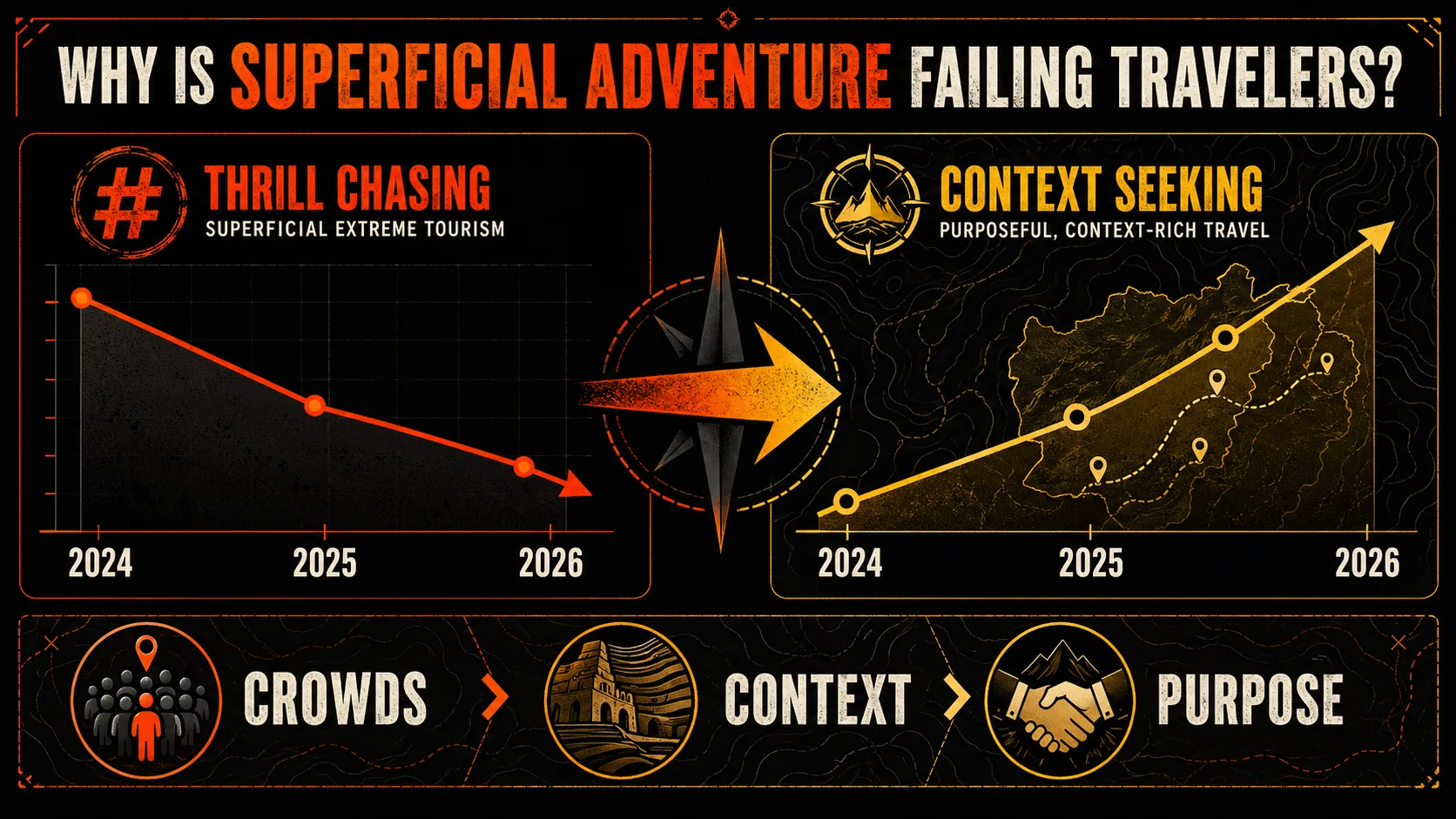
The fatigue is real. You can feel it in travel forums and see it in the data. A 2025 survey by Skift Research found that 68% of frequent adventure travelers expressed dissatisfaction with trips that felt “pre-packaged and lacking in authentic insight.” They’re returning home with photos, but without a sense of transformation. The problem isn’t the destinations; it’s the approach.
The Checklist Mentality Leaves You Empty. I’ve met travelers who’ve “done” North Korea, Somalia, and Venezuela, treating each like a badge on a vest. When asked what they learned, they often have little to say beyond describing security procedures. The location was a stage for their own narrative of daring, not a subject of study. This turns profound places into mere scenery, which is a hollow experience. The thrill fades; the confusion remains.
It Perpetuates Harmful Stereotypes. Fly-in, fly-out “extreme” tourism often reinforces the single story of a place. Visiting a conflict zone only to focus on the bullet holes and barbed wire reduces a rich, multifaceted society to a backdrop of danger. It satisfies a foreign gaze that expects poverty and strife, ignoring resilience, art, humor, and daily life. This doesn’t just misrepresent the destination; it actively harms the people who live there by framing their home solely through a lens of tragedy or risk.
You Miss the Real Story. The most profound moments in Afghanistan are never the ones you expect. It’s not the initial awe at the Bamyan Buddhas’ niches. It’s the hour you spend later with a local artisan in his workshop, as he explains how his family’s plaster-craft techniques are a direct, unbroken link to the monks who built those statues 1,500 years ago. That’s the story you’d miss on a tour that rushes. It’s the difference between observing history and touching its living thread. For a complete picture, our complete guide to Bamyan Valley breaks down why this site demands days, not hours.
The market is correcting itself. Travelers are self-selecting. Those seeking a quick adrenaline hit are finding other outlets. Those yearning for a journey that changes their perspective are looking for a blueprint. They want a framework that turns a challenging destination into a coherent, enlightening experience. That’s the gap Afghanistan fills perfectly.
How do you travel Afghanistan with context?
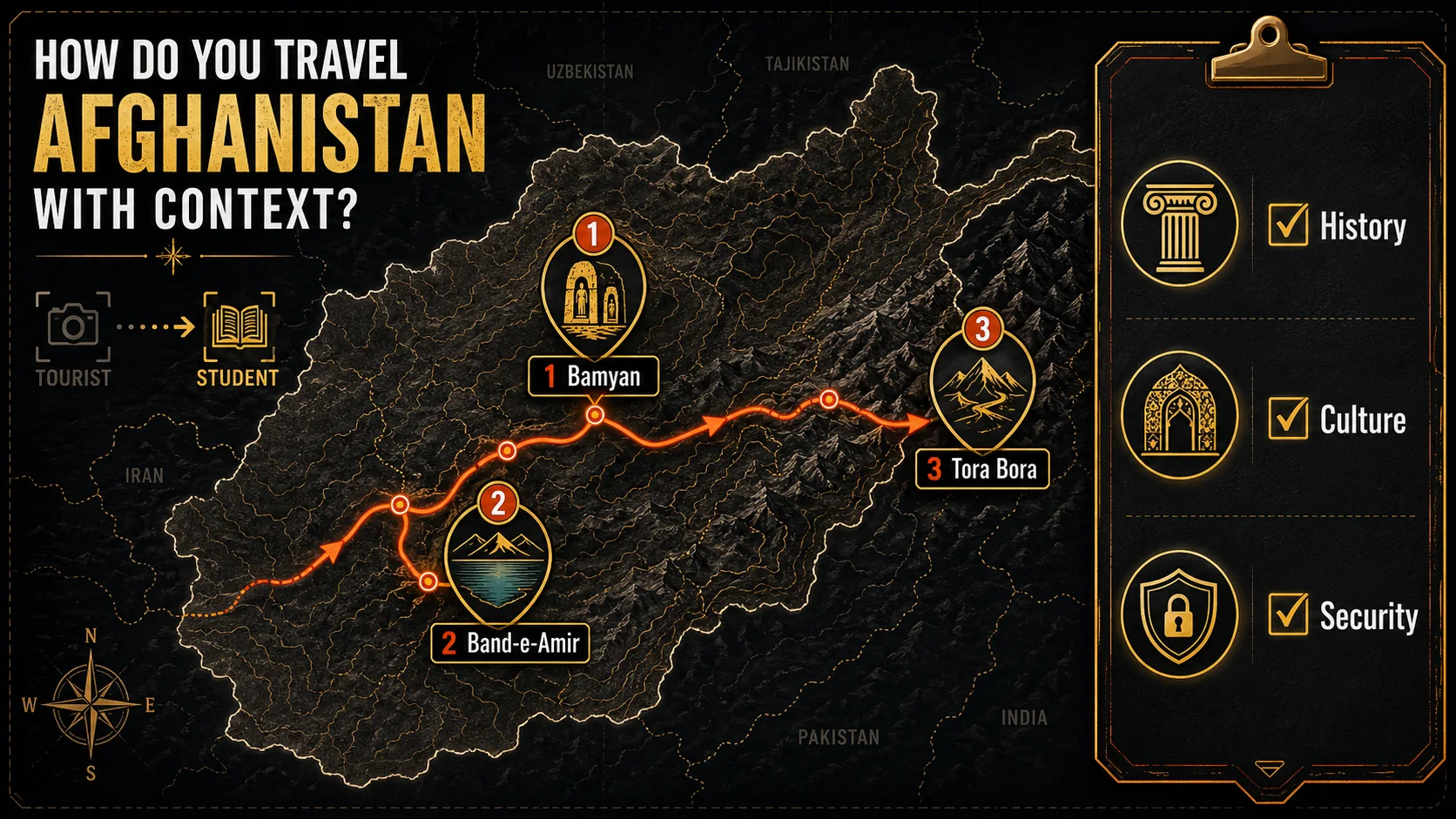
This isn’t a destination for improvisation. A meaningful journey here requires a method. Based on the structure of our own expeditions, here is a step-by-step framework for engaging with Afghanistan consciously. This is how you move from tourist to student.
Step 1: Deconstruct Your Preconceptions (Months Before Departure)
Your first and most important preparation happens at home. You must actively dismantle the monolithic narrative of Afghanistan as a “forever war zone.”
- Start with Counter-Narrative History. Don’t just re-watch recent war documentaries. Read. "The Places in Between" by Rory Stewart is essential. "Games Without Rules" by Tamim Ansary provides the vital long-view history. Listen to music—from the classical rubab of Ustad Mohammad Omar to modern pop from Kabul. This builds a mental mosaic that is complex and human.
- Engage with Afghan Voices. Follow Afghan photographers, journalists, and artists on social media. Read translated poetry by Rumi (born in Balkh, modern Afghanistan). The goal is to enter the country already hearing a multitude of Afghan voices in your head, not just foreign media reports. This pre-work is what separates the conscious traveler from the passive visitor.
Step 2: Frame the Journey as a Timeline, Not an Itinerary
When you arrive, stop thinking in terms of hotels and sites. Start thinking in centuries.
The Ancient Crossroads (Days 1-4): Your journey into the Bamyan Valley is your entry into the ancient world. Here, you’re engaging with the 1st-millennium CE, when this was a thriving center of Buddhist philosophy and art on the Silk Road. Studying the empty niches of the Buddhas isn’t just about their destruction in 2001; it’s about visualizing their creation. How did artists scale those cliffs? Who were the pilgrims? This context makes the subsequent history feel like successive chapters in a very long book, not a sudden tragedy.
The Modern Geopolitical Theater (Days 5-7): Traveling to the regions around Tora Bora shifts the timeline forward. This is where academic understanding becomes physical. You’ll learn about the local security protocols that make travel possible, a practical necessity that also serves as a direct lesson in the country’s current reality. Seeing the terrain explains with immediate clarity why this area held strategic significance. It’s a stark lesson in how geography dictates history. This part of the trip answers the practical question many have, which we address in our resource on is Afghanistan safe to visit.
The Living Present (Throughout): This timeline layer is woven into every day. It’s the conversations during homestays. It’s visiting a local market to understand the economy—what’s grown locally, what’s imported. It’s asking your guide not just “What happened here?” but “What was your family doing during that time?” This layer turns the past from an abstract concept into a lived experience.
Step 3: Practice Reciprocal Engagement, Not Extraction
This is the daily ethic. Your role is guest and student, not inspector or hero.
- Listen More Than You Speak. Ask open-ended questions. “What was it like growing up here?” “What are you hoping for now?” Be prepared for answers that contain both hardship and normalcy.
- Support the Micro-Economy Directly. Buy crafts from the artisan, not a souvenir shop in Kabul. Pay fairly for homestays and meals. Our expeditions build these partnerships directly, ensuring money enters the local economy in the villages we visit. This is a tangible, respectful exchange.
- Document with Consent and Purpose. Before taking a portrait, always ask. Use your camera to capture context—the way light fills the Bamyan valley, the details of a carved wooden door. These images tell a richer story than posed shots.
What are proven strategies to internalize the journey?
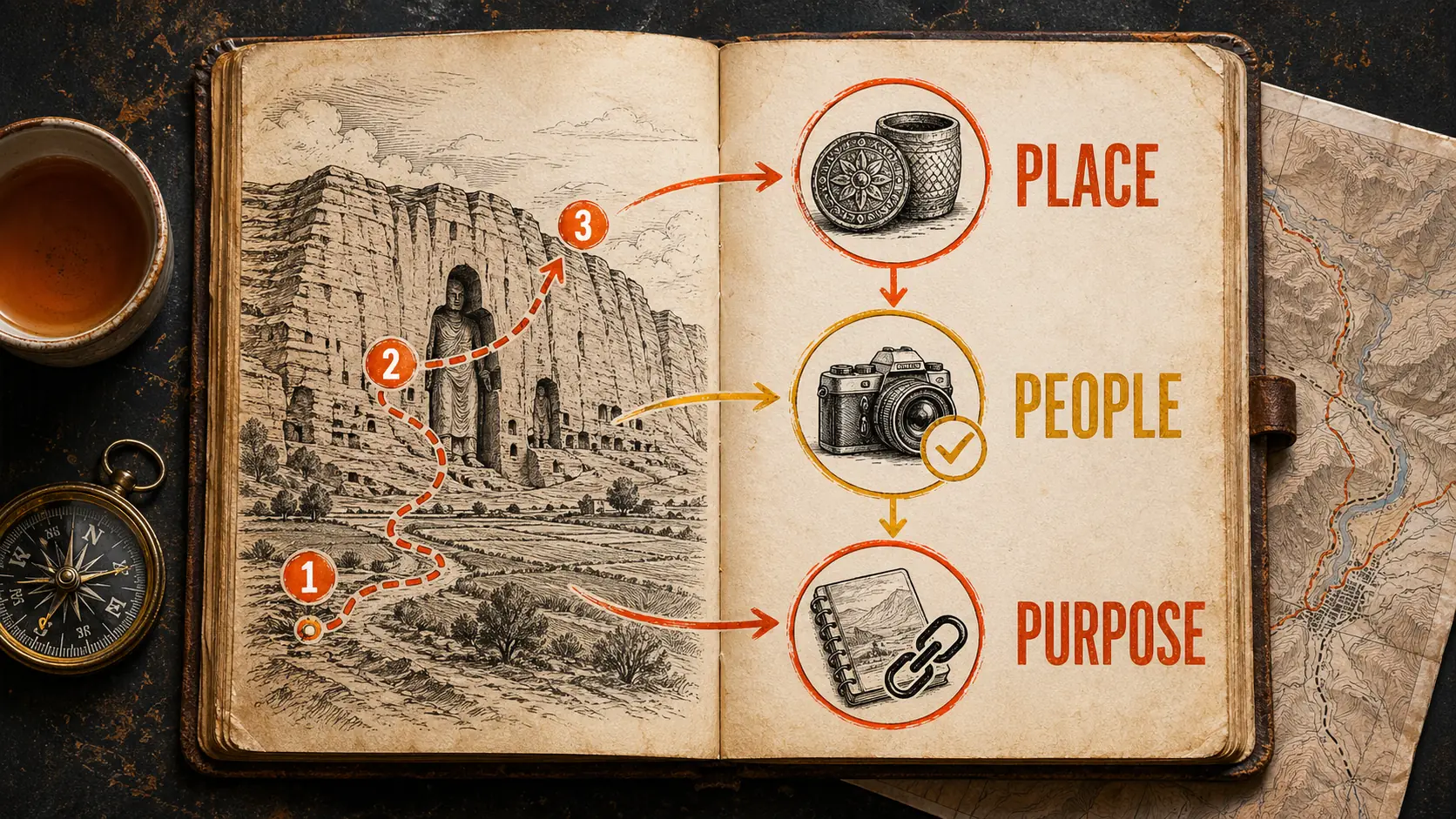
The real work begins when the initial awe fades. How do you process an experience this dense so it doesn’t just become a blur of intense memories? Here’s how to integrate the context you’ve sought.
Maintain a Connection Journal, Not a Log. Don’t just write what you did each day. Write the connections. For example: “Today saw the Khyber Pass. Read about it for years as a strategic invasion route. But talking to our guide, whose family has traded through it for generations, it felt different. It’s not just a border; it’s a vein. Empire history meets daily life.” This practice forces synthesis during the trip.
Follow One Thread Home. You can’t become an expert on all of Afghan history. Pick one thread that captivated you—Silk Road archaeology, modern Afghan cinema, the poetry of the Dari language—and dive deeper when you return. Subscribe to a specialist journal, follow relevant academics. This turns a ten-day trip into a lifelong learning path.
Reframe Your Role in the Story. The conscious traveler’s final duty is to become a translator. When you speak about your trip, avoid the “war zone tourism” clichés. Instead, talk about the layers. Say, “What struck me wasn’t the danger, but the continuity. In Bamyan, you see 6th-century Buddhist art, 12th-century Islamic fortifications, and 21st-century village life all in one glance.” This kind of storytelling challenges stereotypes. It’s an active contribution to a more informed worldview.
Summary: The New Playbook
Afghanistan doesn't just offer an adventure; it demands a recalibration. The old playbook of collecting dangerous destinations is broken. The new model, written here, trades checklist tourism for contextual understanding. It replaces the question "Was it scary?" with "What did it mean?" This journey isn't for everyone. It's for travelers who are done with performance and hungry for perspective. It's for those who know that the hardest frontier to cross isn't a mountain pass, but the gap between hearing a headline and understanding a history. If you're ready to travel with your mind as engaged as your body, this is your blueprint.
Got Questions About Travel in Afghanistan? We've Got Answers.
How do you manage safety on a trip like this?
Safety is our absolute priority, not a marketing tagline. We operate with a dedicated, professional security team that includes local experts who understand the granular, day-to-day conditions of each region we visit. Our routes and schedules are based on real-time information and longstanding local relationships. Security enables the experience; it doesn’t define it. The goal is to create a controlled environment where you can focus on engagement, not anxiety. Every traveler receives a detailed security briefing, and our protocols are constantly updated.
What’s the biggest mistake a first-time traveler to Afghanistan makes?
The biggest mistake is arriving with a closed narrative. If you come only looking for evidence of conflict or poverty, you’ll find it—and you’ll miss everything else. The travelers who have the richest experience are those who arrive with open-ended curiosity, prepared for complexity and contradiction. They’re ready to see stunning natural beauty alongside historical trauma, to experience profound hospitality in a place the world labels as dangerous. Ditch the single story before you land.
Can I travel to Afghanistan independently, or is a tour necessary?
For meaningful, context-rich travel, a specialized tour is not just recommended; it’s essential. The logistical, security, and cultural barriers are significant. A reputable operator provides the framework—secure transport, expert local guides, pre-arranged cultural access, and safety protocols—that allows you to focus on the experience itself. Independent travel here, without deep local knowledge and networks, is impractical and risks being both superficial and unsafe. The value of a tour like ours is in providing the curated access and expert narrative that unlocks the country’s depth.
What should I pack beyond the usual travel gear?
Pack humility and patience above all else. For physical items: sturdy, modest clothing that respects local customs; a high-quality headlamp for exploring cave sites and areas with limited electricity; a journal; a basic phrasebook for Dari or Pashto greetings; and gifts for hosts (educational supplies for children or high-quality tea/coffee are often appreciated). Leave space in your luggage for the books you’ll buy and the perspectives you’ll bring home.
Ready to trade checklist tourism for a journey with lasting meaning?
Afghan Adventure Tours specializes in crafting expeditions that replace superficial thrills with deep understanding. Our 10-day journey through Afghanistan’s legendary landscapes is designed for the conscious traveler—the one who seeks context, not just content. Stop chasing crowds and start seeking the narrative. Claim Your Spot for our Spring 2026 expedition and begin writing a different kind of travel story.
Other Doved Studio projects
Related tools from the same studio you might find useful:
- Magnu Imperiu: Daily history puzzle: guess the empire from six geographic and temporal clues.
- Doved Studio: Studio indie derrière cette app et une dizaine d'autres outils.