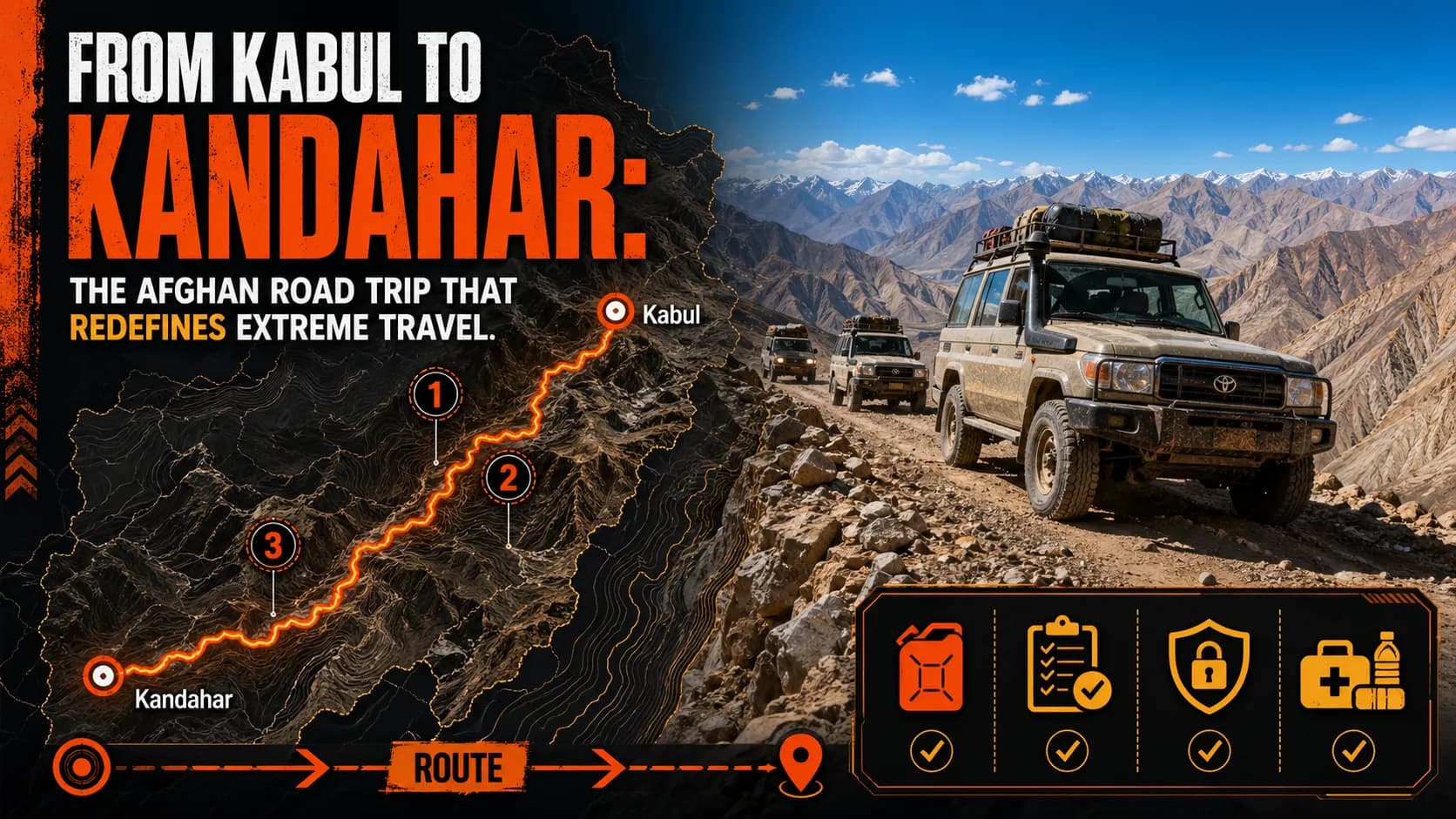
The concept of a road trip has been romanticized to death. The open road, the wind in your hair, a playlist of classic rock. It’s a fantasy that feels safe, predictable, and frankly, a little tired. But what if the road itself was the antagonist? What if every mile demanded your full attention, not just to navigate potholes, but to read a landscape written in layers of history, conflict, and breathtaking resilience? This is the reality of an Afghanistan road trip in 2026.
Forget the curated, sanitized travelogue. The journey from Kabul to Kandahar isn't a scenic drive; it's a 500-kilometer masterclass in extreme overland travel. It’s a route that has moved empires, fueled wars, and witnessed the ebb and flow of civilizations for millennia. Today, it represents the bleeding edge of adventure tourism, a tangible response to the 40% year-on-year surge in demand for journeys through politically complex regions, as noted in recent industry reports. This isn't about ticking off sites from a bus window. It's about earning every vista, every conversation, every moment of profound silence in a place the world has forgotten how to listen to. This guide isn't just about how to drive from point A to point B; it's about how to travel the road that redefines what a road trip can be.
Understanding the Kabul-Kandahar Highway: More Than Asphalt
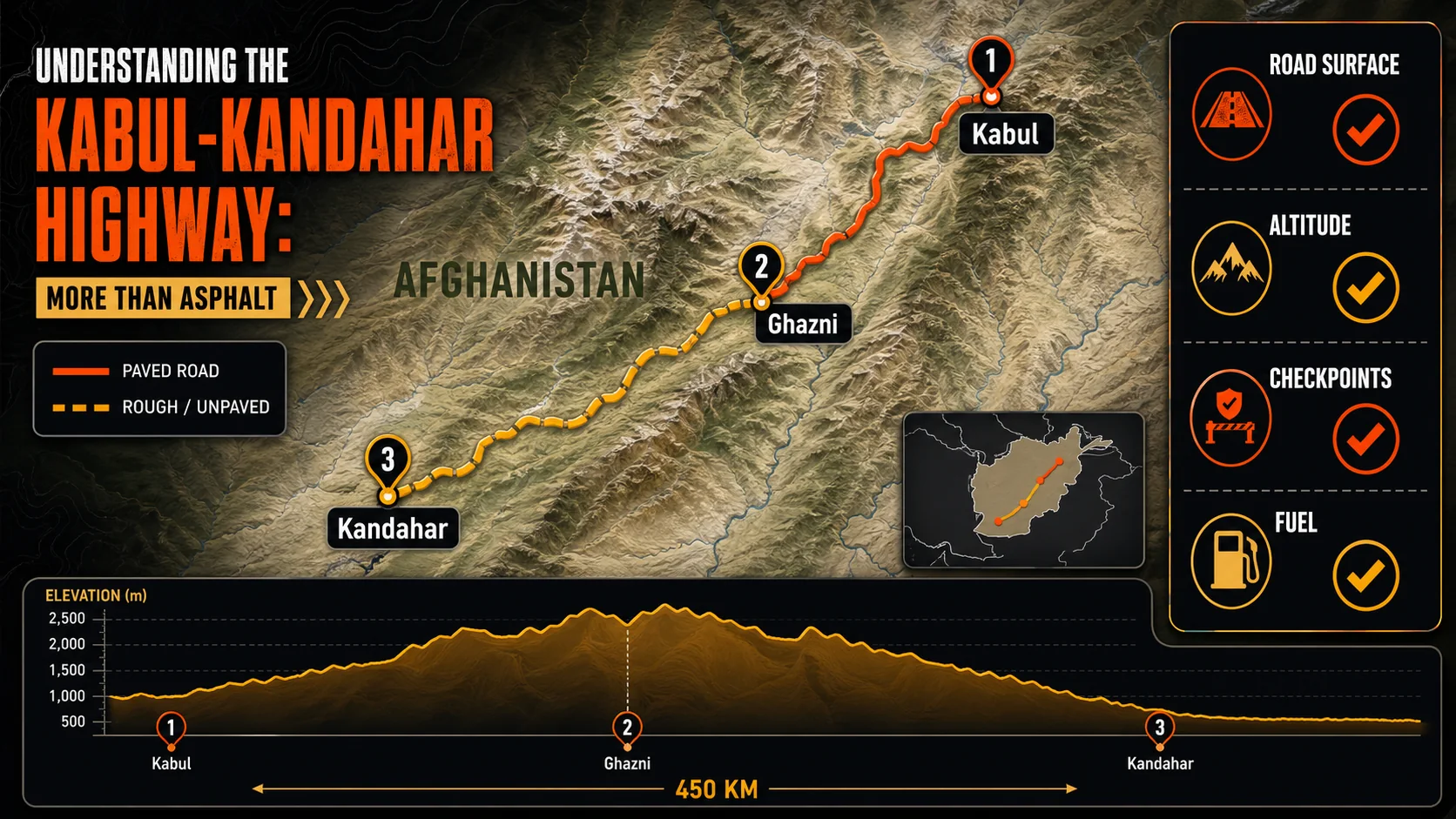
To call the Kabul-Kandahar route a "highway" is a generous act of nomenclature. In parts, it's a modern, Chinese-built ribbon of asphalt. In others, it reverts to its ancient, skeletal form: a dirt track following the contours of mountains older than history. This duality is the first lesson of Afghan overlanding: infrastructure here is a conversation between the present's ambition and the past's immutable geography.
The road follows the spine of Afghanistan, tracing a path through the Hindu Kush's southern foothills. It's a corridor that has always been strategic. Alexander's armies marched here. The Silk Road caravans, laden with spices and silks, plodded along its general course. In the 19th century, it was the Great Game's central nervous system, and in the 21st, a vital artery for coalition forces. You are not driving on a road; you are driving through a living museum of geopolitics.
This context transforms every checkpoint, every repaired bridge, every bustling truck stop from a mundane travel feature into a point of data in a complex narrative. The journey becomes a physical study in resilience. You see it in the Soviet-era tunnels now humming with civilian traffic, and in the new Chinese-funded sections that smooth the way for commerce. Understanding this layered history isn't academic; it's essential for reading the road's mood and understanding the rhythm of life along it.
The Kabul-Kandahar Route at a Glance
| Segment | Distance (Approx.) | Terrain & Key Feature | Travel Time (Convoy) | Cultural Vibe |
|---|---|---|---|---|
| Kabul to Maidan Shar | 70 km | Mixed: Initial city traffic, then open valley. | 2-3 hours | Transition from urban capital to Shia Hazara heartland. |
| Maidan Shar to Ghazni | 130 km | High plateau, potential for dust storms. Historic Minarets. | 4-5 hours | Ancient Islamic capital, palpable sense of deep history. |
| Ghazni to Qalat (Kalat) | 150 km | Most challenging. Mountain passes, unpaved sections. | 5-6 hours | Remote, tribal Pashtun areas. Stark, beautiful isolation. |
| Qalat to Kandahar | 150 km | Opens into desert plains. Road quality improves. | 3-4 hours | Approach to the spiritual capital of the Pashtuns. |
The Terrain is Your Co-Pilot
The physical challenge is non-negotiable. You will encounter wadis (dry riverbeds) that become torrents after a distant mountain rain, sections where the "road" is just the path of least resistance across a scree slope, and high-altitude passes where the air thins and the views stretch into infinity. This demands a vehicle that is a tool, not a toy—typically a rugged, diesel-powered 4x4 like a Toyota Land Cruiser or Hilux, maintained by mechanics who know these roads intimately. Your Afghanistan road trip vehicle is your lifeline; its condition is your first security briefing.
The Human Geography is the Destination
While the landscapes are cinematic, the true destination is the human tapestry along the route. This isn't a wilderness trek; it's a journey through the living rooms of Afghanistan. You stop for tea not at designated rest areas, but in roadside chaikhanas (teahouses) where truckers, police, and local elders gather. The rhythm of your day is set by prayer times, not by a GPS's estimated arrival. The route forces a slow, observant pace, making the cultural immersion not an activity, but the default state of travel. For a deeper dive into preparing for these encounters, our comprehensive what to pack for Afghanistan guide is essential reading.
Why This Road Trip is the Ultimate 2026 Adventure Test
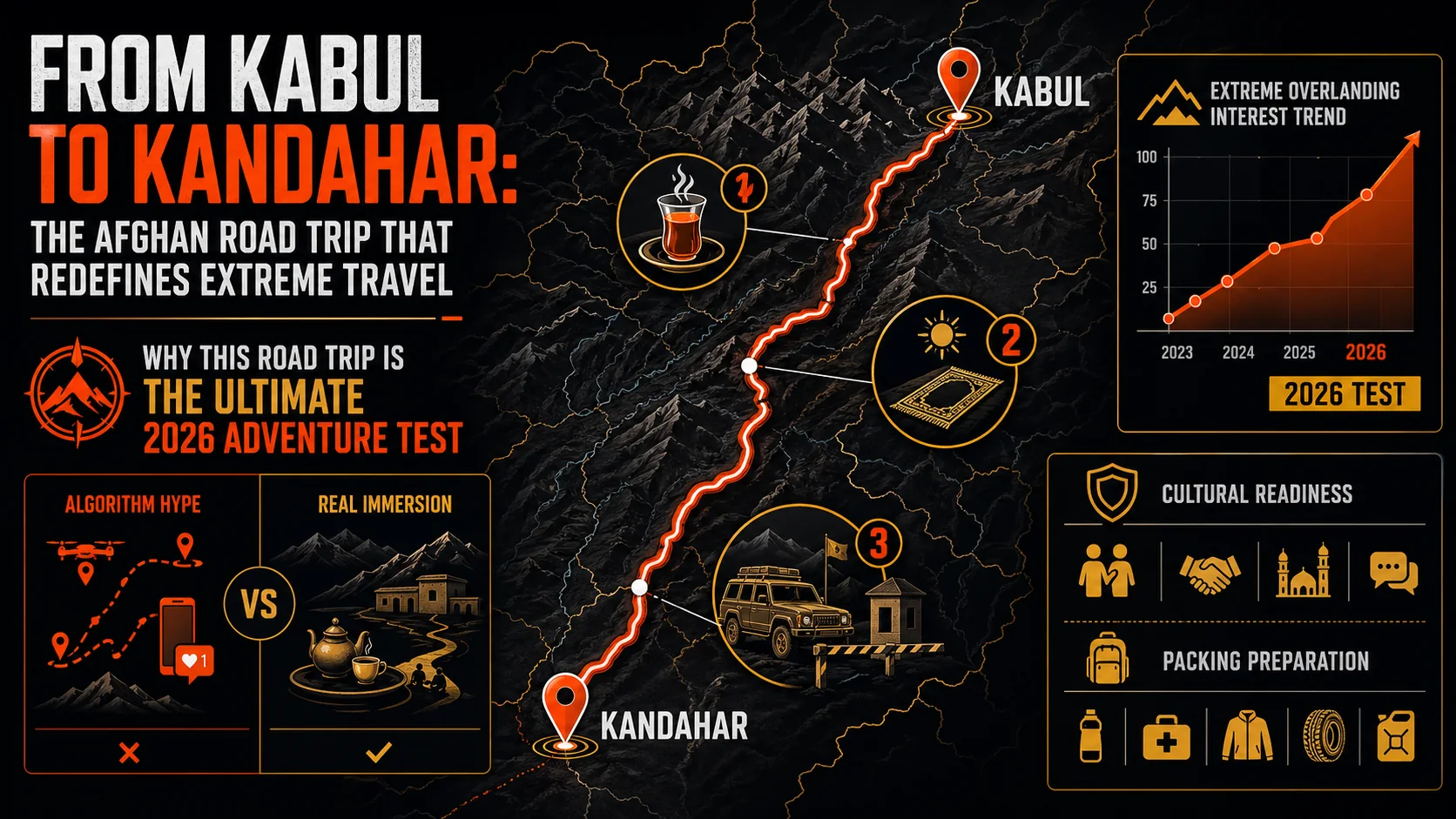
The allure is clear: in an age of algorithmic travel recommendations and Instagram-perfect hotspots, there is a growing hunger for the raw, the real, and the unrepeatable. A recent analysis by Adventure Travel Trade Association noted this shift, highlighting that travelers are increasingly seeking "transformative journeys" over "destination vacations." The Kabul-Kandahar run delivers this in spades. But its status as the ultimate test isn't just about bragging rights; it's about a fundamental shift in what it means to be a traveler.
Problem 1: The Commodification of "Adventure"
Much of what is sold as adventure travel today is risk-managed spectacle. You're helicoptered onto a glacier, guided on a pre-cleaned climbing route, or ushered through a cultural village built for tourists. The challenge is physical, but the context is sterile. The Afghan road trip strips this away. The uncertainty is real. The interactions are unscripted. The route does not care about your comfort. This authenticity is the antidote to commodified adventure. You cannot buy your way out of a dust storm on the Ghazni plateau or fast-track a meaningful conversation with a chaikhana owner. You have to be present, adaptable, and respectful. It tests your patience and your preconceptions far more than it tests your quad muscles.
Problem 2: The Disconnect in Cultural Tourism
Many tours offer cultural "experiences" that feel transactional—a photo op, a handicraft demonstration. On this road, culture is the atmosphere. It's in the way an elder insists you share his meal, not because you paid for it, but because hospitality (melmastia) is a sacred Pashtunwali code. It's in the sight of children playing cricket in the shadow of a 12th-century minaret in Ghazni. The immersion is passive and total, requiring you to absorb rather than consume. To fully appreciate the context of these encounters, understanding the local mindset is key, which is why we address common concerns in our guide on is Afghanistan safe to visit.
Problem 3: The Need for Skilled, Context-Aware Navigation
This is not a route for a solo, off-the-cuff jaunt. The extreme overland travel label is earned. Navigation goes beyond maps. It involves understanding local authority structures, knowing which valleys have cell service (often none), reading weather patterns in a continental climate, and having contingency plans for mechanical failure in areas where the nearest specialist garage could be a day's drive away. The "skill" tested here isn't just off-road driving; it's situational awareness, logistical planning, and intercultural communication at a level most travelers never need to develop. Failure to prepare isn't just inconvenient; it can compromise your safety and the goodwill of the communities you pass through.
How to Execute the Ultimate Afghan Road Trip: A Step-by-Step Method
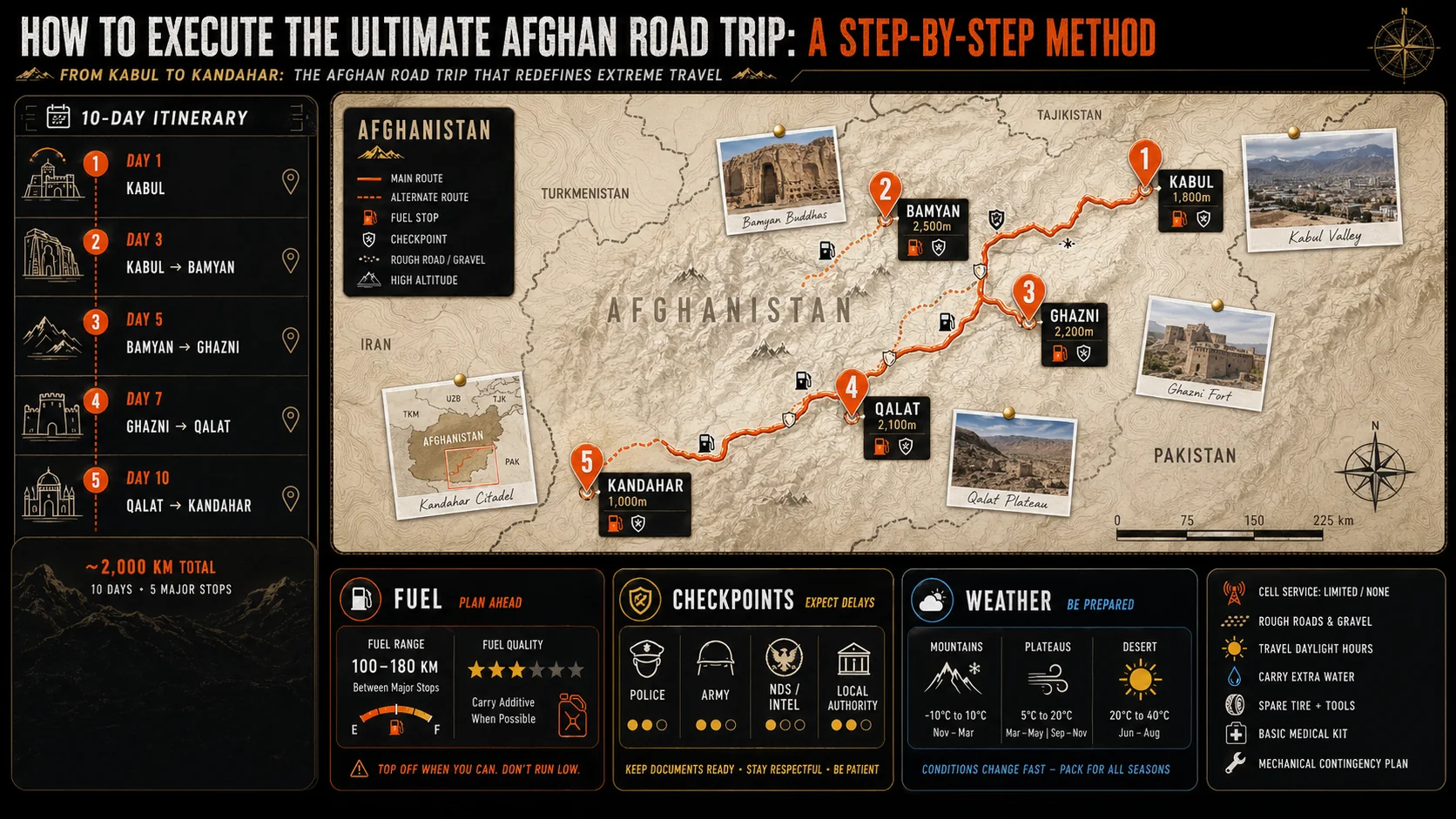
Attempting this journey requires a methodical, respect-driven approach. Based on over 15 years of running expeditions here, I've found this framework non-negotiable for a successful, safe, and profound trip.
Step 1: Assemble the Right Team and Framework
You are only as strong as your weakest logistical link.
- The Local Guide/Operator: This is your most critical decision. You need a francophone or English-speaking guide with over a decade of experience, deep regional contacts, and a reputation for respect. They are your translator, negotiator, cultural interpreter, and often, your fixer. They know which chaikhana serves the best qabili palau and, more importantly, which village elder to pay respects to.
- Security: Professional, discrete, and locally-aware security is part of the package, not an add-on. Their role is less about overt protection and more about risk assessment and liaison with local authorities. Their presence should be felt, not seen, and they must be integrated with your guide's plan.
- The Group: Keep it small. Twelve people is a maximum. A large convoy is intrusive; a small group is manageable and can integrate more authentically. Everyone must be on the same page regarding the trip's physical demands and cultural expectations.
Step 2: Master the Pre-Departure Logistics
Paperwork and preparation are your foundation.
- Visas & Permissions: Afghan tourist visas require invitation letters from a licensed tour operator. Internal travel permissions for certain provinces may also be needed. Your operator should handle this, but start the process at least 3 months in advance.
- Health: Visit a travel clinic specializing in hazardous areas. Vaccinations (Hepatitis A/B, Typhoid, Polio booster) are essential. Carry a comprehensive medical kit and ensure evacuation insurance is in place. I recommend services like International SOS for their on-ground networks.
- Communications: Assume zero reliable cellular coverage. Satellite phones (Iridium or Inmarsat) are mandatory for the lead vehicle. Handheld VHF/UHF radios for convoy communication are also critical.
- Vehicle & Gear: Your operator provides the vehicles, but verify their specs: diesel engines for fuel availability, multiple spare tires, reinforced suspension, and functional winches. Personally, I always carry a portable air compressor, tire repair kits, and extra fuel filters.
Step 3: Navigate the Route Day-by-Day
This is a suggested 7-day routing for the core overland journey, allowing for a slow, immersive pace.
- Day 1-2: Kabul Acclimatization. Don't rush out. Spend two days in Kabul adjusting to the altitude (1,800m) and soaking in the chaotic energy. Visit the Kabul Museum (what remains is powerful) and the historic Babur Gardens. This is where you finalize briefings and bond with your team.
- Day 3: Kabul to Ghazni (with Maidan Shar stop). The journey begins. The landscape opens quickly. Stop at the iconic, if damaged, Minarets of Ghazni. These 12th-century towers are a stark reminder of the region's former glory as a capital of the Ghaznavid Empire. Overnight in a basic but secure guesthouse in Ghazni city.
- Day 4: Ghazni to Qalat (Kalat). This is the most demanding driving day. You'll climb into the central highlands, navigating passes well over 3,000 meters. The terrain is raw and the villages sparse. The reward is a sense of profound isolation and beauty. Qalat is a historic fort town, a strategic pivot point for centuries.
- Day 5: Qalat to Kandahar. The land flattens into the Arghandab River valley. The approach to Kandahar is charged with a different energy—the spiritual and historical weight of the Pashtun south. Visit the shrine of the Cloak of the Prophet Mohammed (if accessible) and explore the old city's bazaar.
- Day 6: Kandahar Exploration. Kandahar deserves a day. It's a city of nuance, often reduced to a headline. Understand its role as a trading hub and political center.
- Day 7: Return to Kabul (by air). For most, driving back the same route is unnecessary. A domestic flight from Kandahar to Kabul (about 1 hour) is the pragmatic choice, saving time and wear.
Step 4: Engage with Culture, Don't Spectate
This is where a trip becomes transformative.
- Meals: Eat where locals eat. The roadside chaikhana is your university. Share a plate of mantu (dumplings) or shorwa (soup). Accept every offer of tea. To understand the flavors you'll experience, our Afghan cuisine guide breaks down the staples.
- Photography: Ask permission, always. For portraits, a smile and a gesture with your camera is the minimum. In conservative areas, be especially sensitive. Landscapes are always fair game, but avoid photographing military or security infrastructure.
- Conversation: Through your guide, ask questions. About family, about crops, about life. Avoid politics. Talk about cricket, which is a national obsession. These fragments of connection are the real souvenirs.
Step 5: Manage Risk and Expect the Unexpected
A rigid schedule is your enemy.
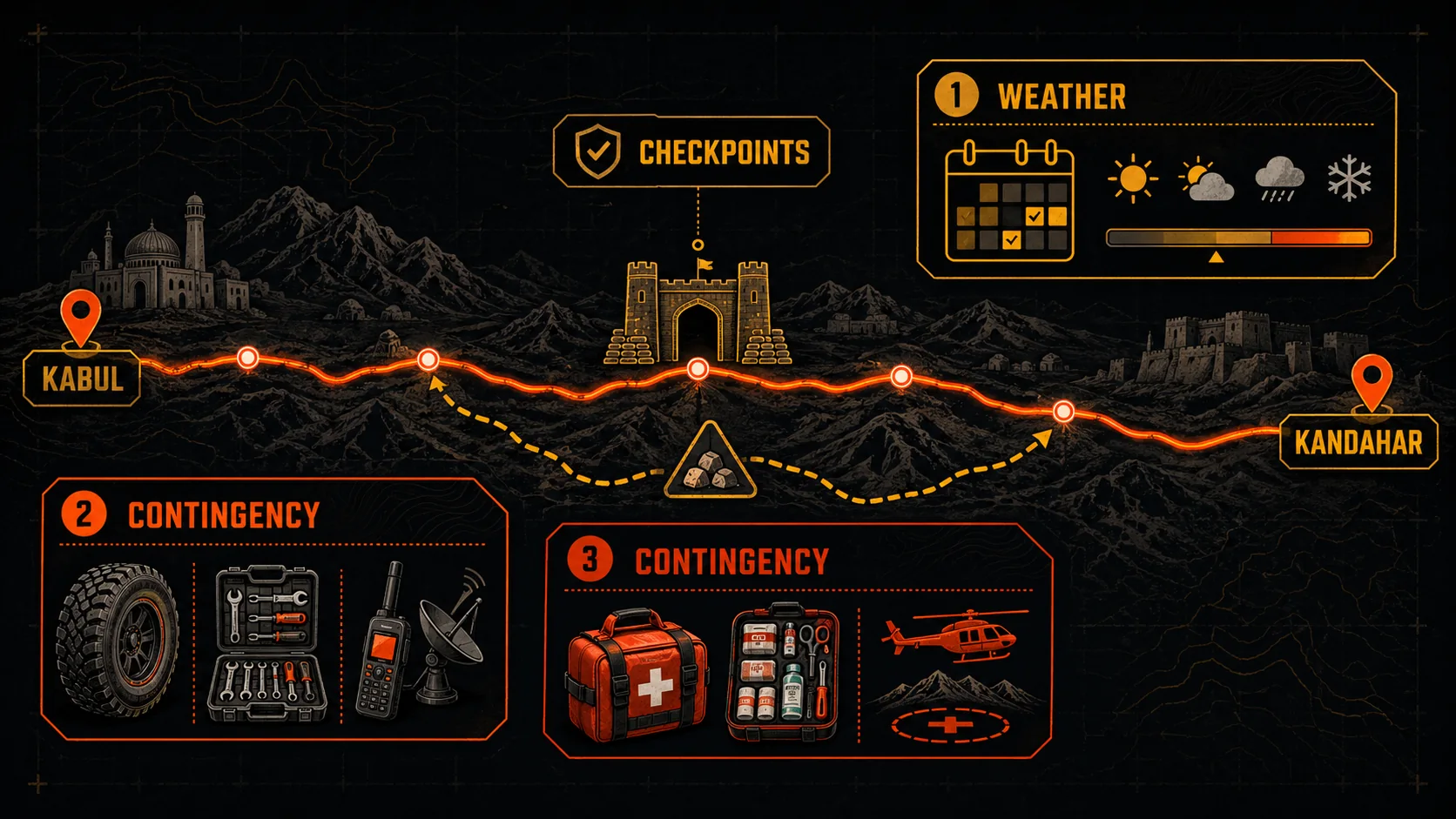
- Checkpoints: Be polite, patient, and let your guide do the talking. Have passports and permits ready. These are routine.
- Weather: Spring (April-May) and Autumn (Sept-Oct) are the only viable windows. Summer heat is brutal, and winter snow closes passes. Even in spring, mountain weather shifts fast.
- Contingencies: Have a plan for vehicle breakdown (satellite phone, spare parts), medical issue (evacuation insurance details), and route blockage (alternative paths identified in advance with your guide).
Proven Strategies for a Transformative Journey
 , observational notes ("Children in village X flying kite made of plastic bag & string - incredible ingenuity"), and a short reflective paragraph at the bottom.)
Moving beyond the basics, these strategies elevate the journey from an accomplishment to a deeply personal transformation.
Strategy 1: Travel with a Question, Not Just an Itinerary
Don't just go to "see Afghanistan." Go with a personal line of inquiry. It could be as simple as "How does hospitality function in a place with so little?" or "What does daily resilience look like here?" This lens gives shape to your observations. You'll start noticing the meticulous repair of a mud-brick wall, the pride in a perfectly brewed pot of tea, the laughter that erupts in a market despite everything. The road provides the data; your question helps you make meaning of it.
Strategy 2: Embrace the "Pause"
Western travel conditioning tells us to maximize every hour. Here, the magic is in the unplanned stop. It's pausing for an hour to help (or simply watch) a farmer and his sons dig their car out of the mud. It's accepting an invitation to sit in a shop and talk, even though it "puts you behind schedule." The schedule is arbitrary. The connection is real. These pauses are where you step out of the traveler role and briefly, humbly, participate in the rhythm of the place.
Strategy 3: Document for Depth, Not for Content
Yes, take photos. But also write. Not just a diary of "what I did," but of "what I felt and what I learned." Jot down snippets of conversation. Sketch a landscape. Note the smell of diesel, dust, and baking bread at a truck stop. This practice forces active processing, which is what cements the experience in your memory. The photos will remind you of what it looked like; your notes will remind you of what it was.
Strategy 4: Debrief Relentlessly
At the end of each day, talk with your group. Not just about the cool thing you saw, but about the confusing interaction, the moment of discomfort, the beautiful thing that was also sad. This shared sense-making is crucial. It helps process the cognitive dissonance that a place like Afghanistan inevitably generates and turns a group of strangers into a cohesive expedition team. For more structured guidance on planning such deep travel experiences, explore our central resource, the hub for all travel guides.
Got Questions About an Afghan Road Trip? We've Got Answers.
How long does the full Kabul to Kandahar drive take? For a tourist convoy moving at a safe, observant pace with stops for cultural interaction and photography, plan for 3-4 full days of driving one-way. Rushing it defeats the purpose and increases risk. Most expeditions, including time in both cities and for contingencies, allocate 7-10 days for the entire loop or one-way journey with a flight return.
What is the single biggest mistake first-timers make? Underestimating the cultural and logistical weight of the journey. People focus on the physical adventure but fail to mentally prepare for the intensity of the immersion and the absolute reliance on local expertise. Trying to plan this independently or with an inexperienced operator is the fastest path to failure, and potentially, serious trouble.
Can I do this trip as a solo traveler? Practically and ethically, no. The security, logistical, and cultural navigation requires a team. Reputable operators like ours have minimum group sizes (often 4-6) to make the expedition viable and safe. Solo travel in this context is not adventurous; it's irresponsible to yourself and the communities you pass through.
What's the food and accommodation really like? Forget luxury. Accommodation ranges from basic, secure guesthouses in cities to traditional homestays or expedition camping in remote areas. The food, however, is a highlight—hearty, flavorful, and central to social bonding. You'll eat delicious rice dishes (palau), kebabs, soups, and fresh bread (naan). Dietary restrictions can be accommodated with advance notice, but flexibility is key.
Ready to Trade the Map for a Legend?
Afghan Adventure Tours turns the concept of an extreme road trip into a meticulously crafted, deeply respectful expedition. We handle the daunting logistics—security, expert guiding, vehicles, permits—so you can focus on the raw experience of the journey itself. This isn't a vacation; it's a frontier. If you're ready to move beyond the guidebook and write a chapter of your own, the road is waiting. Claim Your Spot on our Spring 2026 expedition and let's write the first line together.
Other Doved Studio projects
Related tools from the same studio you might find useful:
- Magnu Imperiu: Daily history puzzle: guess the empire from six geographic and temporal clues.
- Doved Studio: Studio indie derrière cette app et une dizaine d'autres outils.