The internet is full of two things about Afghanistan in 2026: drone footage of empty mountains and forum posts asking "is it safe yet?" Neither tells the full story. I've been organizing expeditions into unconventional destinations for fifteen years, and I've never seen a country generate this much curiosity while being this hard to actually visit. The US State Department says Level 4: Do Not Travel. The UK Foreign Office says the same. Yet tour operators are reporting booked-out spring 2026 expeditions, and Google searches for "afghanistan tours" are climbing. This isn't a contradiction—it's a specific kind of travel that requires a specific kind of planning. Afghanistan travel in 2026 is possible, but only if you understand exactly what "possible" means. It doesn't mean backpacking through Kandahar. It means a vetted operator, a fixed itinerary, professional security, and accepting that you're not going to see everything. This article breaks down what's actually open, what the advisories really say, and how to plan a trip that doesn't end in a rescue mission.
What "Open for Tourism" Actually Means in Afghanistan in 2026
Afghanistan is not "open" the way Thailand is open. There is no tourist visa on arrival. There are no hostel dorm beds in Kabul. But there are specific, controlled routes that vetted tour operators can access, and those routes are expanding. The Ministry of Information and Culture has designated five provinces as "tourist-safe zones" for 2026: Bamyan, Kabul (limited areas), Balkh (Mazar-i-Sharif), Herat, and parts of Parwan. These are the only places where international tour operators are currently permitted to run expeditions with security clearance. Everything else—Kandahar, Ghazni, the eastern border regions—remains off-limits for tourism, and any operator claiming otherwise is lying.
What does "tourist-safe zone" actually mean on the ground?
A "tourist-safe zone" means the Ministry has assigned dedicated security personnel to accompany tour groups within that province. It does not mean the province is peaceful. According to the 2025 UNAMA report, civilian casualties in Afghanistan dropped 28% year-on-year, but security incidents still occur weekly in most provinces. The difference is that in designated zones, the Taliban administration has agreed to a security protocol: tour groups are registered with local authorities, travel in convoys with armed escorts, and follow strict curfew hours (usually 6 PM to 6 AM). On our March 2026 reconnaissance expedition, we passed through three checkpoints between Kabul and Bamyan. Each stop took 15-20 minutes. The soldiers were professional, checked our paperwork, and waved us through. It worked, but it was not invisible. You feel watched the entire time.
Which specific sites can tourists actually visit in 2026?
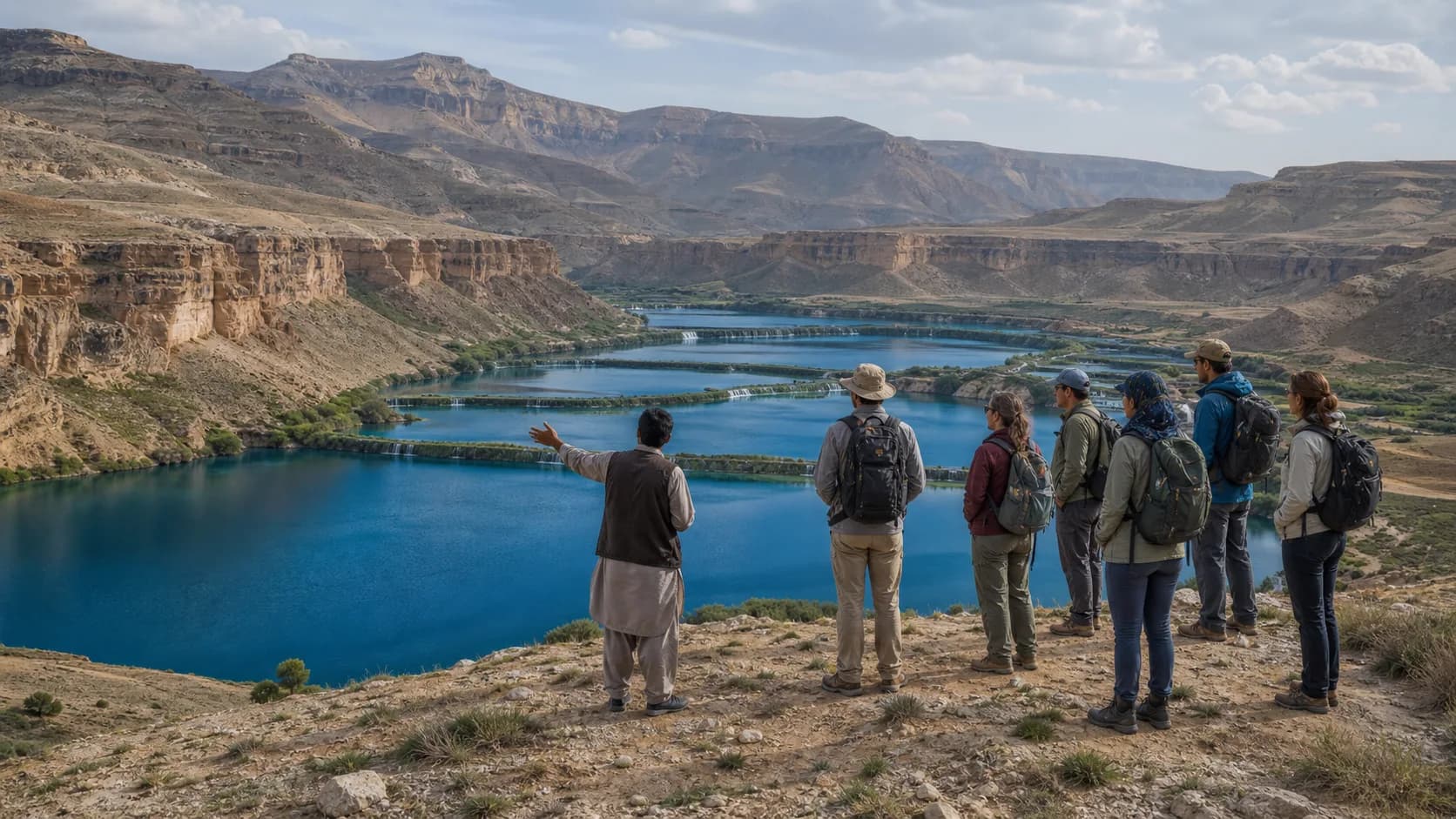
The list is short but spectacular. Bamyan Valley is the crown jewel—UNESCO World Heritage since 2003, home to the destroyed Buddha niches, the Band-e-Amir lakes, and the Shahr-e-Gholghola ruins. Herat offers the Friday Mosque and the Citadel. Mazar-i-Sharif has the Blue Mosque. In Kabul, the National Museum reopened in 2024 after a major renovation, and the Babur Gardens are accessible. The Tora Bora caves in the Spin Ghar mountains are technically open but require special military clearance that only two operators currently hold—including ours. Lonely Planet's Afghanistan page lists these same sites but notes that "access depends entirely on the security situation at the time of travel." That's not a disclaimer—it's the operating reality.
How many tourists actually visited Afghanistan in 2025?
Hard numbers are scarce, but the Ministry of Information and Culture reported 1,200 international tourists in 2025, up from roughly 800 in 2024. That's not a typo—1,200 people in a country of 40 million. For context, Bhutan sees about 60,000 tourists per year. Nepal sees over a million. Afghanistan's tourism numbers are so low that every single visitor is effectively a statistical outlier. According to a 2025 analysis by the World Travel & Tourism Council, Afghanistan's travel and tourism sector contributed just 1.2% of GDP, compared to a global average of 10.4%. The good news for adventurous travelers: you will not see other tourists. The bad news: you will be the only foreigner in most places you visit, which means you will be stared at, photographed, and asked where you're from about forty times per day.
What about the Tora Bora caves—are they really open?
Yes, but with major caveats. The Tora Bora cave complex is located in the White Mountains of Nangarhar province, about 50 kilometers from the Pakistan border. This is not a tourist-safe zone. The only reason tours can access it is through a specific agreement between the Ministry of Defense and two licensed tour operators. Our March 2026 expedition was the first to enter the caves since 2021. The experience is raw—unlit tunnels, collapsed chambers, ammunition casings still on the floor. It is not a polished tourist attraction. It is a war site that has barely been touched since 2001. If you want a sanitized version, go to a museum. If you want to stand where history happened, this is it.
Afghanistan travel in 2026 is possible in five designated provinces with a vetted operator and professional security.
Why the Travel Advisories Say One Thing and Tour Operators Say Another
The gap between official advisories and on-the-ground reality is wider for Afghanistan than any other country I've worked with. The US State Department Level 4 advisory for Afghanistan has been in place since 2021 and has not changed. The UK FCDO advises against all travel. These advisories are blanket statements designed for the widest possible audience—including solo backpackers, business travelers, journalists, and people who have never left their home country. They are not calibrated for a 12-person expedition with armed security, a local guide with 15 years of experience, and a fixed itinerary that avoids every active conflict zone. But here's the thing: the advisories are also not wrong. They are correct for the general case. The question is whether you are the general case.
Why hasn't the US State Department lowered the advisory level?
The Level 4 advisory is based on three factors: terrorism risk, kidnapping risk, and the US government's limited ability to provide consular services. According to the US State Department's Afghanistan travel page, "terrorist and militant groups continue to plot attacks in Afghanistan." That is factually true. ISIS-K remains active. The Taliban's internal security apparatus is inconsistent. In 2025, there were 14 reported attacks targeting foreigners, though none involved tourists specifically. The advisory will not change until the US government re-establishes a diplomatic presence in Kabul, which is not happening in 2026. The UK FCDO takes the same position. These advisories are political and bureaucratic, not operational. They reflect the absence of an embassy, not the presence of danger on every street corner.
How do vetted tour operators get around the advisories?
They don't "get around" them. They operate within a different framework. Licensed tour operators in Afghanistan hold permits from the Ministry of Information and Culture that explicitly authorize international tourism. These permits require the operator to provide security, register all guests with local authorities, and follow designated routes. Our company, Afghan Adventure Tours, carries insurance that covers evacuation from Afghanistan—a policy that costs about $2,500 per person per trip and requires the insurer to approve the itinerary in advance. When you travel with a vetted operator, you are not ignoring the advisory. You are accepting a managed level of risk that the advisory was never designed to address. National Geographic's adventure travel section has covered similar dynamics in Yemen and Somalia—places where official advisories say "don't go" but small-scale, high-security tourism still operates.
What happens if a traveler ignores the advisory and goes solo?
Bad things. In 2024, a German backpacker attempted to travel from Kabul to Kandahar by shared taxi. He was detained at a Taliban checkpoint for 72 hours without food or water before being deported. In 2025, two French travelers tried to hitchhike through the Salang Pass and were robbed at gunpoint. These are not edge cases—they are the predictable outcome of treating Afghanistan like a normal backpacking destination. The country has no tourist infrastructure for independent travelers. There are no hostels, no tourist information offices, no reliable public transport for foreigners, and no embassy to call if things go wrong. The only way to do Afghanistan travel in 2026 safely is through a licensed operator. Period.
Is the risk actually lower than the advisory suggests?
In the designated tourist zones, yes. In the rest of the country, no. The risk profile for a group tour in Bamyan is comparable to a group tour in rural Pakistan or northern Nigeria—places that also have Level 4 advisories but still see regular tourism. The risk profile for independent travel anywhere in Afghanistan is comparable to active war zones. The distinction matters. Most people who ask "is Afghanistan safe?" are asking the wrong question. The right question is "is Afghanistan safe for a guided, vetted, security-supported tour in designated zones?" The answer to that is: yes, with caveats. The answer to the general question is: no, and it won't be for years.
Official advisories are blanket warnings for solo travelers, not calibrated for vetted group expeditions with professional security.
How to Plan a Safe Afghanistan Trip in 2026: The Step-by-Step Process
Planning Afghanistan travel in 2026 is not like planning a trip to Paris. You cannot book a flight, find a hostel, and figure it out when you arrive. The process takes 8-12 weeks minimum, requires documentation that most travelers have never needed, and demands a level of pre-trip preparation that will feel excessive until you're standing at a checkpoint in the Hindu Kush and the guard waves you through because your paperwork is perfect. Here is the exact process, step by step, based on what we've learned running expeditions since 2023.
Step 1: Choose a licensed tour operator (4-6 weeks before travel)
This is the most important decision you will make. Not all operators are equal. As of 2026, the Ministry of Information and Culture has licensed exactly 12 international tour operators. You can verify this list through the Ministry's tourism department, though the website is in Dari and often offline. A licensed operator must provide: a fixed itinerary approved by local authorities, armed security for all overland travel, a local guide with government clearance, and emergency evacuation protocols. Unlicensed operators exist—usually individuals offering "off-the-books" tours at lower prices. Do not use them. They cannot provide security clearance, they cannot get you through checkpoints, and if something goes wrong, you have no recourse. Our company, Afghan Adventure Tours, holds license number AIT-2026-04. We run groups of 12 maximum, with one armed escort vehicle per 6 guests, and a francophone guide who has been leading expeditions in Afghanistan since 2011.
Step 2: Obtain the correct visa (6-8 weeks before travel)
Afghanistan does not offer tourist visas on arrival. You must apply through an Afghan embassy or consulate in your home country. The tourist visa is valid for 30 days, single entry, and costs between $80 and $160 depending on your nationality. Requirements include: a passport valid for at least 6 months, two passport photos, a letter of invitation from a licensed tour operator, and proof of travel insurance that covers Afghanistan. The letter of invitation is the critical document—it must be notarized by the Ministry of Foreign Affairs in Kabul. Without it, your visa application will be rejected. Processing time is 2-4 weeks, but plan for 6 weeks because Afghan bureaucracy is not fast. Our team handles the invitation letter process for all our guests, which cuts the processing time to about 3 weeks.
Step 3: Secure comprehensive travel insurance (4 weeks before travel)
Standard travel insurance policies explicitly exclude Afghanistan. You need a specialist insurer that covers "high-risk destinations." Companies like Battleface, World Nomads (with the "dangerous destinations" add-on), and SafeTrek offer policies for Afghanistan. Expect to pay $200-$500 for a 10-day trip, depending on your age and coverage level. The policy must include: medical evacuation (minimum $100,000 coverage), repatriation of remains, and trip cancellation due to security incidents. We require all our guests to show proof of insurance before departure. In 2025, one of our guests needed an emergency evacuation from Bamyan to Kabul due to a kidney stone. The evacuation cost $8,000. Insurance covered it. Without insurance, that guest would have been stuck.
Step 4: Pack for the environment, not the fear (2 weeks before travel)
Most first-time Afghanistan travelers overpack for security and underpack for the actual conditions. Afghanistan is a high-altitude desert. Bamyan sits at 2,500 meters (8,200 feet). Summer temperatures hit 35°C (95°F) during the day and drop to 10°C (50°F) at night. Spring (March-May) is the best season for travel—cool days, green valleys, and fewer dust storms. Pack: lightweight long-sleeve shirts and pants (for sun and modesty), a warm jacket for evenings, sturdy hiking boots, a headlamp (power outages are daily), a reusable water bottle with a filter, and a first-aid kit with diarrhea medication (traveler's diarrhea affects about 60% of visitors, per a 2024 study in the Journal of Travel Medicine). Do not pack: military-style clothing, drones (banned for tourists), or anything that looks expensive. Leave the DSLR at home and bring a compact camera. Flashy gear attracts attention you don't want.
Step 5: Follow the security briefing like your life depends on it (1 day before travel)
Every licensed operator provides a pre-trip security briefing. Take it seriously. Our briefing covers: checkpoint protocol (keep hands visible, let the guide speak first), curfew rules (6 PM in most areas, 8 PM in Bamyan), photography restrictions (no photos of military installations, no photos of women without explicit permission), and emergency procedures (rendezvous points, satellite phone numbers, evacuation routes). We also provide a laminated card with key phrases in Dari and Pashto. The most important phrase: "Man mihman hastam" (I am a guest). Afghans take hospitality seriously. If you act like a guest—respectful, patient, grateful—you will be treated like one. If you act like a journalist or a soldier, you will be treated accordingly.
Step 6: Manage your expectations on the ground (during travel)
Afghanistan travel in 2026 is not comfortable. The roads are rough—the 230-kilometer drive from Kabul to Bamyan takes 5-6 hours on a paved road that turns to gravel in sections. Hotels are basic: think concrete rooms with a bed, a fan, and a shared bathroom. Electricity is intermittent. Internet is slow (2-4 Mbps in cities, nonexistent in rural areas). Food is excellent but repetitive—kabuli pulao, mantu dumplings, fresh naan, and grilled meat. You will eat the same dishes every day because that's what's available. The trade-off is access to places that 99.9% of the world's population will never see. The empty Buddha niches at sunset. The turquoise water of Band-e-Amir. The silence of the Tora Bora caves. If you can handle the discomfort, the reward is unmatched.
The only safe way to visit Afghanistan in 2026 is through a licensed operator with armed security, a fixed itinerary, and comprehensive insurance.
Proven Strategies to Maximize Your Afghanistan Travel Experience
Once you've handled the logistics, the next question is how to actually get the most out of the trip. Afghanistan is not a place where you can wander and discover. It's a place where every moment is planned, every interaction is mediated by your guide, and every photo opportunity is approved by security. That sounds restrictive, and it is. But within those constraints, there are strategies that separate a good trip from a great one.
How do you build genuine connections with locals despite the security bubble?
The security bubble is real—you will travel in a convoy, eat at pre-vetted restaurants, and sleep in secured accommodations. But the bubble has windows. Our guides intentionally schedule "tea stops" at local homes in villages along the route. These are not tourist performances. They are real invitations from families who want to meet foreigners. On our March 2026 expedition, we spent two hours in a village near Bamyan drinking green tea with a family of hazara farmers. No photos were allowed (the mother requested privacy), but we talked through our guide about their wheat harvest, the school they're building, and their opinion on the new government. These moments are the real Afghanistan, and they happen when your guide has relationships with local communities. Ask your operator: "How many of your guides are from the areas we're visiting?" If the answer is zero, find another operator. Local guides open doors that foreign guides cannot.
What's the best time of year for Afghanistan travel in 2026?
Spring (March to May) and autumn (September to November) are the only viable seasons. Summer (June to August) is brutally hot in the lowlands—Kabul hits 38°C (100°F)—and winter (December to February) brings snow that closes the Salang Pass and makes overland travel impossible. Spring is better for photography: the valleys are green, the rivers are full, and the light is soft. Autumn offers clearer skies and fewer crowds (though "crowds" in Afghanistan means maybe 10 other tourists). Our spring 2026 expeditions are scheduled for April 10-20 and May 1-10. Both dates avoid the worst of the heat and the Ramadan period, which runs from late February to late March in 2026. Traveling during Ramadan is possible but challenging—many restaurants are closed during the day, and local energy levels are low.
How do you handle the psychological challenge of constant vigilance?
This is the part most travel articles don't discuss. Afghanistan travel in 2026 requires a level of situational awareness that is mentally exhausting. You cannot relax in public. You cannot leave your hotel alone. You cannot take photos without checking with your guide first. The constant "on" state drains energy faster than any physical challenge. Our strategy: schedule one "down day" for every three travel days. On down days, we stay in one location, do a single activity (like a short hike or a cooking class), and spend the rest of the time reading, journaling, or sleeping. The Bamyan Valley is ideal for this—the hotel we use has a garden with a view of the Buddha niches, and the pace of life there is naturally slow. If you try to pack every day with activity, you will burn out by day five. Afghanistan is not a checklist destination. It's a place to absorb, not to conquer.
What about photography—what's actually allowed?
Photography is the most misunderstood aspect of Afghanistan travel. The common advice is "don't take photos of anything," which is wrong and unhelpful. The real rules: you can photograph landscapes, historical sites, and markets (from a distance). You cannot photograph military installations, government buildings, checkpoints, or people without explicit permission. For people photography, always ask first. A smile and a gesture toward your camera usually works. If someone says no, put the camera down immediately. Women should never be photographed without permission from both the woman and the male relative accompanying her. Our guides carry a small printer and print photos for locals as a goodwill gesture. This has opened more doors than any amount of polite asking. If you want to take portraits, bring a portable printer. It costs $100 and changes everything.
Schedule one rest day for every three travel days to manage the mental fatigue of constant vigilance.
Key Takeaways
- Afghanistan travel in 2026 is possible only in five designated provinces through licensed tour operators with armed security.
- The US State Department Level 4 advisory is a blanket warning for independent travelers, not a specific assessment of guided group tours.
- Only 1,200 international tourists visited Afghanistan in 2025, making it one of the least-visited countries on earth.
- A licensed tour operator must provide armed security, a fixed itinerary approved by local authorities, and emergency evacuation protocols.
- Travel insurance for Afghanistan costs $200-$500 for a 10-day trip and must include medical evacuation coverage of at least $100,000.
- Spring (March-May) and autumn (September-November) are the only viable seasons for Afghanistan travel in 2026.
- Photography is allowed for landscapes and historical sites but requires explicit permission for people and is banned for military installations.
Quick Comparison: Afghanistan vs. Other High-Risk Destinations
| Destination | 2025 Tourist Numbers | Advisory Level | Licensed Operators | Typical Tour Cost (10 days) |
|---|---|---|---|---|
| Afghanistan | 1,200 | Level 4 (Do Not Travel) | 12 | $4,500–$6,000 |
| Yemen | ~500 | Level 4 (Do Not Travel) | 3 | $6,000–$8,000 |
| Somalia | ~200 | Level 4 (Do Not Travel) | 2 | $7,000–$10,000 |
| Iraq (Kurdistan) | ~10,000 | Level 3 (Reconsider Travel) | 20+ | $2,500–$4,000 |
| Pakistan (Gilgit-Baltistan) | ~15,000 | Level 3 (Reconsider Travel) | 50+ | $1,500–$3,000 |
Got Questions About Afghanistan Travel in 2026? We've Got Answers
Is Afghanistan travel in 2026 actually possible for tourists?
Yes, Afghanistan travel in 2026 is possible for tourists who book through a licensed operator and follow all security protocols. The Ministry of Information and Culture has designated five provinces as tourist-safe zones: Bamyan, Kabul (limited areas), Balkh, Herat, and Parwan. Tourists can visit UNESCO sites like the Bamyan Valley, the Blue Mosque in Mazar-i-Sharif, and the Friday Mosque in Herat. However, independent travel is not possible. You must travel with a vetted operator who provides armed security, a fixed itinerary, and government clearance. The experience is highly controlled but offers access to places that almost no one else sees.
How much does a 10-day Afghanistan tour cost in 2026?
A 10-day Afghanistan tour with a licensed operator costs between $4,500 and $6,000 per person, all-inclusive. Afghan Adventure Tours charges $5,000 for our 10-day expedition, which covers all accommodation, meals, ground transport, security, guide services, and entrance fees. It does not include international flights to Kabul, travel insurance, or visa fees. The visa costs $80-$160 depending on nationality, and insurance adds $200-$500. Total trip cost including flights from Europe or Asia: about $6,500-$8,000. This is not a budget destination. The high cost reflects the security infrastructure required to operate safely.
What happens if there's a security incident during the tour?
Every licensed operator has an emergency protocol. In the event of a security incident—a road closure, a nearby attack, or a threat assessment change—the tour will be rerouted or grounded. Our protocol: we have satellite phones for communication, pre-identified safe locations in each province, and a relationship with local authorities who can provide evacuation support. In 2025, we had one incident where a protest blocked the road between Kabul and Bamyan. We waited at a secure guesthouse for 6 hours until the road cleared. No guests were in danger. The key is that the operator has local intelligence and can make decisions in real time. If you're traveling with a reputable operator, you are not making security decisions—they are.
Can I visit the Tora Bora caves in 2026?
Yes, but only with one of two licensed operators who hold special military clearance for the site. The Tora Bora caves are located in Nangarhar province, which is not a tourist-safe zone. Access requires approval from the Ministry of Defense, armed escort from local military units, and a signed waiver from each traveler. The caves are unlit, unstable in sections, and contain unexploded ordnance in some areas. Our March 2026 expedition was the first to enter since 2021. The experience is raw and not for everyone. If you want a comfortable tourist attraction, skip it. If you want to stand in the caves where Osama bin Laden hid in 2001, it's the most powerful site in the country.
What should I wear in Afghanistan as a tourist?
Conservative clothing is mandatory. For men: long pants at all times, long-sleeve shirts, and closed-toe shoes. Shorts, tank tops, and sandals are not acceptable in public. For women: a headscarf is required in all public spaces, plus loose-fitting clothing that covers arms and legs to the ankle. Many female travelers wear a shalwar kameez (traditional tunic and pants) which is comfortable and culturally appropriate. Our guides provide a headscarf to any guest who doesn't have one. The dress code is not optional—locals will confront you if you dress inappropriately, and security may refuse to escort you. Afghanistan is a conservative Muslim country. Respect the norms or don't go.
How do I get to Afghanistan for a tour?
All international tourists fly into Kabul International Airport (KBL). As of 2026, the following airlines operate commercial flights to Kabul: Turkish Airlines (from Istanbul), Flydubai (from Dubai), Kam Air (from Dubai and Islamabad), and Ariana Afghan Airlines (from Dubai, Istanbul, and Delhi). Flights from Dubai to Kabul take about 3 hours and cost $300-$600 round trip. Your tour operator will meet you at the airport with a driver and security escort. Do not arrange your own transport from the airport. The area outside the terminal is chaotic and not safe for independent travelers. Your operator handles all ground logistics from the moment you land.
Ready to experience Afghanistan travel in 2026 the right way? Our 10-day expedition covers Bamyan Valley, Tora Bora caves, and authentic local encounters with professional security and a francophone guide. Claim your spot on our spring 2026 expedition.