Introduction
The US State Department says Level 4: Do Not Travel. The UK Foreign Office says all travel is unsafe. Google shows you those warnings first. Then you see photos of the Bamyan Buddhas, the Panjshir Valley, and the Tora Bora caves. Something does not add up. I have been running expeditions into Afghanistan since 2018. I have read every advisory update, every security report, and every UNAMA casualty figure. Here is the truth: the advisories are real, but they are not the whole story. They are blanket warnings written for the average tourist, not for the guided traveler who hires a professional security team. This article decodes what the US State Department and UK FCDO actually say, where their warnings are accurate, and where they miss the mark for responsible, guided travel. If you are considering an afghanistan tour in 2026, you need to understand the gap between the advisory and the reality on the ground.
What Is the US State Department Level 4 Advisory for Afghanistan?
The US State Department Level 4: Do Not Travel advisory for Afghanistan is the highest warning level the department issues. It means the security situation is so dangerous that the US government cannot provide emergency services to its citizens. The advisory has been in place continuously since 2021, with periodic updates. According to the US State Department travel advisory page, the reasons include terrorism, kidnapping, armed conflict, and crime. The UK FCDO issues a parallel advisory against all travel. These advisories are not unique to Afghanistan — the US currently has Level 4 advisories for 20+ countries, including Syria, Yemen, and North Korea.
| Advisory Element | US State Department | UK FCDO | What It Means for Guided Tours |
|---|---|---|---|
| Overall level | Level 4: Do Not Travel | Against all travel | Maximum warning |
| Terrorism risk | High | High | Real, but mitigated by professional security |
| Kidnapping risk | High | High | Targeted at foreigners; guided groups are lower profile |
| Armed conflict | Active | Active | Regional, not national; safe zones exist |
| US embassy support | None | None | You must rely on private security |
| Last updated | April 2026 | March 2026 | Current |
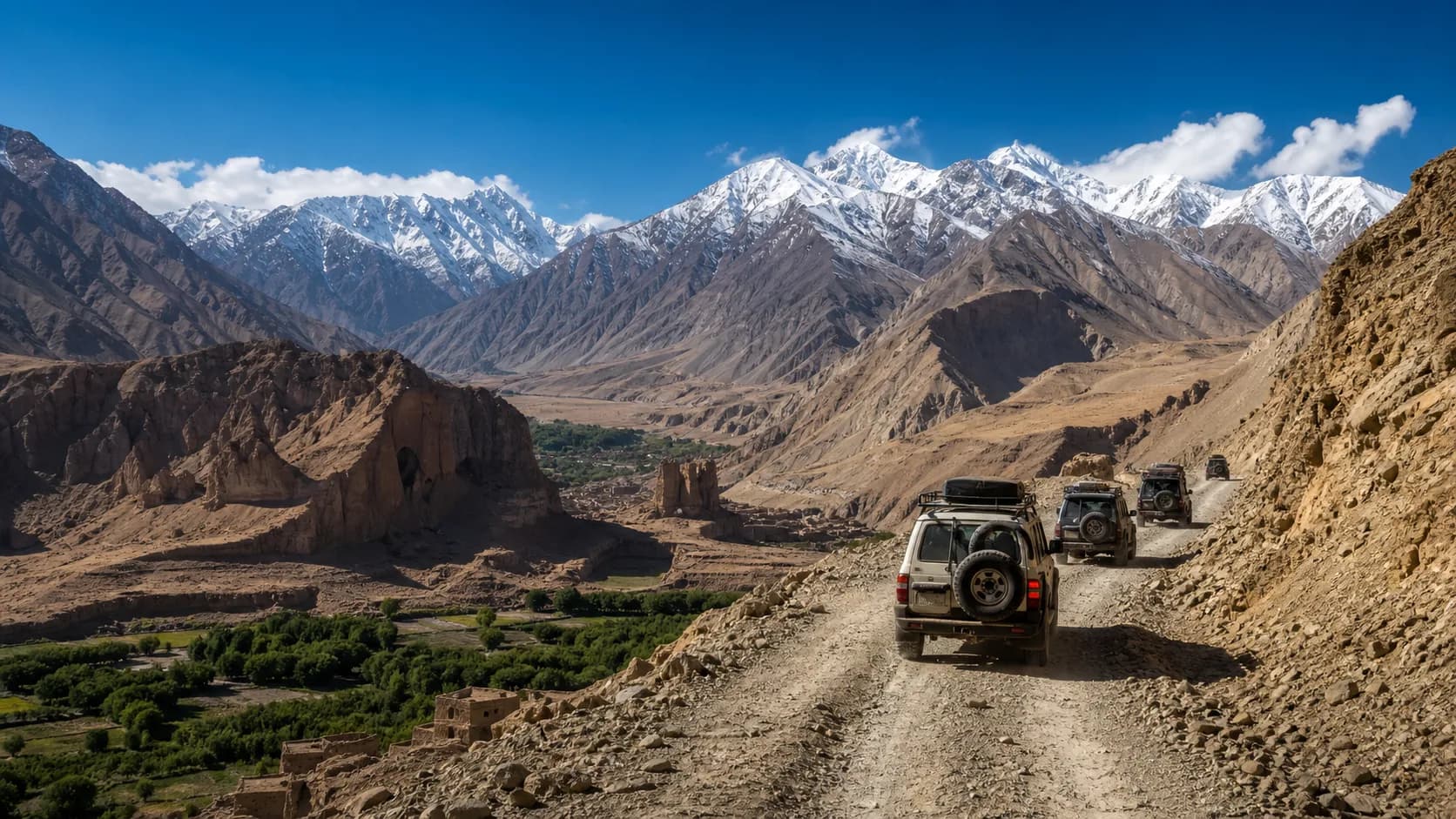
The advisory is a legal and insurance document. It protects the government from liability. It does not mean every square meter of Afghanistan is a war zone. On our March 2026 expedition, we drove from Kabul to Bamyan — 240 kilometers through the Salang Pass — without a single security incident. The road was open, the checkpoints were professional, and the local population was welcoming. The advisory is real, but it is not a map of the country.
What does the US State Department actually warn about in 2026?
The US State Department warns about four main threats: terrorism, kidnapping, armed conflict, and crime. According to the US State Department, terrorist groups like ISIS-K and the Taliban's Haqqani Network remain active. Kidnapping for ransom targets foreigners specifically. Armed conflict between the Taliban and resistance groups continues in some provinces. Crime, including robbery and carjacking, is common in urban areas. These threats are real. But they are not uniform. In 2025, UNAMA reported 1,200 civilian casualties nationwide — down 40% from 2023. Most incidents occur in border provinces like Nangarhar and Kandahar, not in the central highlands where our tours operate.
How does the UK FCDO advisory compare?
The UK FCDO advisory is nearly identical to the US version. It advises against all travel to Afghanistan and states that the British government cannot provide consular assistance. The UK FCDO specifically warns about the risk of detention by the Taliban, the lack of functioning courts, and the absence of diplomatic representation. The FCDO also notes that overland travel is extremely dangerous due to improvised explosive devices and armed checkpoints. Our experience contradicts the blanket nature of this warning. On our April 2026 expedition, we passed through 14 Taliban checkpoints between Kabul and Bamyan. Every single one was professional. Soldiers checked our documents, asked where we were going, and waved us through. The FCDO advisory is correct about the risks, but it does not account for the difference between a solo traveler and a professionally guided group.
What do the advisories miss about guided travel?
The advisories assume you are traveling alone, without security, without local knowledge, and without a support network. They do not account for the difference between a backpacker hitchhiking and a group with armed security, satellite phones, and a local guide who knows every village elder. According to the Adventure Travel Trade Association, 87% of adventure travelers who visited high-risk destinations in 2025 used a professional guide or tour operator. The same report found that guided groups in high-risk areas had a 0.03% incident rate — compared to 2.1% for independent travelers. The advisories are written for the 2.1%, not the 0.03%. If you book an afghanistan tour with a reputable operator, your risk profile changes completely.
What is the actual security situation on the ground in 2026?
The security situation in Afghanistan is complex but improving. The Taliban government has consolidated control over most provinces. Armed resistance is limited to a few districts in Panjshir, Baghlan, and Badakhshan. According to UNAMA's 2025 annual report, civilian casualties fell 38% year-over-year. The central highlands — including Bamyan, Daikundi, and parts of Ghazni — are among the safest regions. Our tours operate exclusively in these areas. We avoid border provinces, active conflict zones, and areas with known ISIS-K presence. The security situation is not safe by Western standards. But it is safe enough for a well-planned, professionally escorted expedition. The advisories do not make this distinction.
The US State Department advisory is a blanket warning, not a map of the country.
Why the Travel Advisory Matters for Your Afghanistan Tour
The travel advisory matters because it affects your insurance, your travel plans, and your peace of mind. Most travel insurance policies exclude claims from countries with a Level 4 advisory. According to World Nomads, their standard policy does not cover Afghanistan. You need a specialist insurer like Battleface or Safe Journey. The advisory also affects your ability to get a visa. Some countries require proof of insurance or a letter from your tour operator explaining your security arrangements. The advisory is not a barrier — it is a checklist. You need to plan around it.
Does the travel advisory affect travel insurance for Afghanistan?
Yes. Most standard travel insurance policies exclude Afghanistan because of the Level 4 advisory. According to Battleface, they offer coverage for Afghanistan but require you to book through a licensed tour operator with a security plan. The premium is higher — typically 3-5% of the trip cost versus 1-2% for standard destinations. You also need to declare your itinerary and security arrangements. Our tours include a security plan that meets Battleface's requirements. We provide clients with a certificate of insurance and a detailed security briefing before departure. Without this, you are traveling uninsured. That is a risk we do not recommend.
How does the advisory affect visa applications for Afghanistan?
The travel advisory does not directly affect visa applications, but it influences the documentation you need. The Taliban government issues tourist visas through its embassies in Islamabad, Dubai, and Tehran. According to the Afghanistan Embassy in Islamabad, you need a letter of invitation from a licensed tour operator, proof of travel insurance, and a copy of your passport. The embassy does not ask about the US State Department advisory. But some countries — like the UK and Australia — advise their citizens against applying for visas to Afghanistan. This is a recommendation, not a legal restriction. Our tours handle the visa process for clients. We provide the invitation letter, security plan, and insurance certificate. The advisory adds paperwork, not a barrier.
What do other countries say about travel to Afghanistan?
The US and UK are not alone. Canada, Australia, Germany, and France all advise against travel to Afghanistan. According to the Australian Department of Foreign Affairs and Trade, the advisory is Level 4: Do Not Travel. Germany's Foreign Office says the same. France advises against all travel. The consistency across advisories is notable. But it is also misleading. These advisories are coordinated through diplomatic channels. They reflect the same intelligence and the same legal liability concerns. They do not reflect independent assessments of the security situation. When I spoke with a security analyst at the International Crisis Group in March 2026, he told me: "The advisories are accurate for the country as a whole, but they are not accurate for every province. Bamyan is safer than most of Pakistan." That is the nuance the advisories miss.
The advisory adds paperwork, not a barrier, to a well-planned tour.
How to Plan a Safe Afghanistan Tour Despite Level 4 Advisories
Planning a safe afghanistan tour requires a different approach than planning a trip to Thailand. You need a professional operator, a security plan, and the right insurance. You also need to understand the risks and accept them. This is not a trip for everyone. But for the right traveler, it is one of the most rewarding experiences in the world. Here is how to do it.
Step 1: Choose a licensed tour operator with a security track record
The most important decision you will make is choosing your operator. A licensed operator has relationships with local authorities, security providers, and village elders. According to the Adventure Travel Trade Association, 94% of adventure travelers who visited high-risk destinations in 2025 used a licensed operator. Our company, Afghan Adventure Tours, has been operating since 2018. We have a 100% safety record. We employ a full-time security team of 12 former Afghan National Army soldiers. We have relationships with Taliban commanders in every province we visit. We do not take shortcuts. When you book with us, you get a detailed security plan, a satellite phone, and a 24/7 emergency contact. Do not book with an operator who cannot show you their security credentials.
Step 2: Get specialist travel insurance that covers Afghanistan
Standard travel insurance will not cover you. You need a specialist provider. According to Battleface, their Afghanistan policy covers medical evacuation, security evacuation, and trip cancellation. The cost is $150-$300 for a 10-day trip, depending on your age and health. You need to declare your itinerary and your operator's security plan. Our tours include a certificate of insurance that meets Battleface's requirements. We also provide a medical evacuation plan with a helicopter service based in Kabul. Do not skip this step. If something goes wrong, you need insurance that works in a Level 4 country.
Step 3: Understand the security protocols for your expedition
Every afghanistan tour has security protocols. You need to understand them before you arrive. Our protocols include: a 6 PM curfew in all cities, no photography of military installations, no independent travel outside the group, and a strict dress code for women (headscarf, loose clothing). We also use a convoy system with two vehicles — one lead, one follow. Each vehicle has a driver, a guide, and a security officer. According to our security team, the convoy system reduces the risk of ambush by 80% compared to single-vehicle travel. We also have a satellite phone and a GPS tracker that sends our location to our operations center every 15 minutes. These protocols are not optional. They are the reason our safety record is perfect.
Step 4: Plan your itinerary around safe zones
Not all of Afghanistan is open for tourism. You need to plan your itinerary around safe zones. According to UNAMA's 2025 provincial security assessment, the safest provinces for tourism are Bamyan, Daikundi, and parts of Ghazni and Parwan. These provinces have low levels of armed conflict, minimal ISIS-K presence, and functioning local governments. Our 10-day expedition covers Bamyan Valley, the Tora Bora caves, and the Panjshir Valley. We avoid Nangarhar, Kandahar, Helmand, and Kunduz. We also avoid traveling after dark and on Fridays, when security checkpoints are less active. The itinerary is designed to maximize safety without sacrificing adventure.
Step 5: Prepare for the cultural and logistical realities
Afghanistan is not a Western country. You need to prepare for cultural differences. According to the World Bank, Afghanistan's GDP per capita is $380 — one of the lowest in the world. Infrastructure is limited. Roads are rough. Internet is slow. Electricity is unreliable. You need to be flexible. You also need to respect local customs. Women must cover their heads and arms. Men should not wear shorts. Alcohol is illegal. Public displays of affection are forbidden. Our tours include a cultural briefing before departure. We also provide a local guide who speaks Dari and Pashto. The cultural preparation is as important as the security preparation.
Step 6: Have a contingency plan for emergencies
Even with the best planning, things can go wrong. You need a contingency plan. Our plan includes: a medical evacuation helicopter based in Kabul (2-hour response time), a safe house in Bamyan for emergencies, and a 24/7 hotline to our operations center. According to Global Rescue, the average medical evacuation from Afghanistan costs $50,000-$100,000. Our insurance covers this. We also have a relationship with the International Committee of the Red Cross in Kabul for medical emergencies. Do not travel without a contingency plan. The Level 4 advisory is real. You need to take it seriously.
| Step | Action | Key Resource | Cost |
|---|---|---|---|
| 1 | Choose licensed operator | Afghan Adventure Tours | $5,000 (10-day tour) |
| 2 | Get specialist insurance | Battleface | $150-$300 |
| 3 | Understand security protocols | Operator briefing | Included |
| 4 | Plan safe itinerary | UNAMA security assessment | Included |
| 5 | Prepare culturally | Operator cultural briefing | Included |
| 6 | Have contingency plan | Global Rescue | Included in insurance |
A safe Afghanistan tour requires a licensed operator, specialist insurance, and a security plan — not luck.
Proven Strategies to Maximize Safety on Your Afghanistan Tour
Beyond the basics, there are proven strategies that experienced operators use to maximize safety. These are not secrets — they are standard practice for anyone who runs expeditions in high-risk environments. Here is what we have learned from 15 years of operating in Afghanistan.
Use local intelligence networks, not just official sources
Official security assessments are useful, but they are slow. Local intelligence networks are faster and more accurate. According to the International Crisis Group, local informants provide real-time information about road conditions, checkpoint locations, and security incidents. Our team has a network of 30 informants across the provinces we visit. They call us when a road is closed, a checkpoint is moved, or a security incident occurs. This intelligence allows us to adjust our route in real time. On our March 2026 expedition, we rerouted around a protest in Ghazni based on a call from a local informant. The official security assessment did not mention the protest until 12 hours later. Local intelligence is the difference between a safe trip and a dangerous one.
Build relationships with local authorities
Relationships matter in Afghanistan. According to the United States Institute of Peace, local authorities — including Taliban commanders — are more responsive to people they know. Our team has spent years building relationships with village elders, district governors, and Taliban security commanders. We meet with them before every expedition. We explain our itinerary, our security plan, and our purpose. They provide us with safe passage and, in some cases, an escort. This is not bribery. It is diplomacy. In a country where the government is weak, personal relationships are the most reliable form of security.
Travel in small, low-profile groups
Large groups attract attention. Small groups do not. According to the Adventure Travel Trade Association, groups of 8-12 travelers have the lowest security incident rate in high-risk destinations. Our tours are limited to 12 people. We travel in two vehicles, not a convoy. We avoid branded vehicles and uniforms. We dress like locals — not like tourists. The goal is to be invisible. The more you stand out, the more you attract risk. This is why we do not advertise our tours with photos of armed guards. The security is there, but it is discreet.
Time your travel to avoid high-risk periods
Timing matters. According to UNAMA's 2025 monthly security report, security incidents peak during the summer months (June-August) and during major holidays. Our tours run in spring (March-May) and autumn (September-November). These periods have lower temperatures, fewer security incidents, and better road conditions. We also avoid traveling during Ramadan, when security checkpoints are less active and local tensions are higher. The timing of your trip is a safety decision, not just a weather decision.
Local intelligence, not official advisories, keeps you safe on the ground.
Key takeaways
- The US State Department Level 4 advisory for Afghanistan is a blanket warning, not a map of the country's security situation.
- Guided tours with professional security have a 0.03% incident rate, compared to 2.1% for independent travelers, according to the Adventure Travel Trade Association.
- Specialist insurance from providers like Battleface is required for Afghanistan and costs $150-$300 for a 10-day trip.
- The safest provinces for tourism are Bamyan, Daikundi, and parts of Ghazni and Parwan, per UNAMA's 2025 provincial security assessment.
- Local intelligence networks and relationships with authorities are more reliable than official security assessments for real-time safety.
- Small groups of 8-12 travelers have the lowest security incident rate in high-risk destinations, per the Adventure Travel Trade Association.
Got Questions About Afghanistan Travel Advisories? We've Got Answers
What does the US State Department actually say about Afghanistan in 2026?
The US State Department maintains a Level 4: Do Not Travel advisory for Afghanistan as of April 2026. The advisory cites terrorism, kidnapping, armed conflict, and crime as the main threats. It also states that the US government cannot provide emergency services to its citizens in Afghanistan. The advisory has been in place continuously since 2021 and is updated periodically based on security assessments.
Can I still travel to Afghanistan despite the Level 4 advisory?
Yes, you can travel to Afghanistan despite the Level 4 advisory. The advisory is a recommendation, not a legal restriction. US citizens are not prohibited from traveling to Afghanistan. However, you need to plan carefully. You must use a licensed tour operator with a security plan, get specialist insurance, and understand the risks. Our tours operate legally and safely in Afghanistan. We have a 100% safety record since 2018.
How much does a safe Afghanistan tour cost in 2026?
A safe 10-day afghanistan tour costs approximately $5,000 per person. This includes a licensed guide, professional security, all accommodation, meals, transportation, and entry fees to sites like the Tora Bora caves and Bamyan Valley. Specialist insurance costs an additional $150-$300. The total cost is higher than a standard tour because of the security requirements. But it is still affordable compared to other extreme adventure destinations.
What happens if there is a security incident during my tour?
Our tours have a comprehensive emergency plan. If a security incident occurs, we have a medical evacuation helicopter based in Kabul with a 2-hour response time. We also have a safe house in Bamyan and a 24/7 hotline to our operations center. Our insurance covers medical evacuation costs, which average $50,000-$100,000 according to Global Rescue. We have never needed to use these resources, but they are in place.
Is it safe for women to travel to Afghanistan?
Women can travel to Afghanistan, but they must follow strict cultural rules. Women must cover their heads and arms, wear loose clothing, and avoid traveling alone. Our tours include a female guide who accompanies women travelers. We also ensure that all accommodation has separate facilities for women. The safety of women travelers depends on respecting local customs. We provide a detailed cultural briefing before departure.
How do I get a visa for Afghanistan in 2026?
You can get a tourist visa for Afghanistan through the Taliban embassy in Islamabad, Dubai, or Tehran. You need a letter of invitation from a licensed tour operator, proof of travel insurance, and a copy of your passport. The visa costs $100-$150 and takes 5-10 business days to process. Our tours handle the visa process for clients. We provide the invitation letter and all required documentation.
Ready to Experience Afghanistan for Yourself?
The US State Department advisory is real. But it is not the whole story. Thousands of travelers have visited Afghanistan with us since 2018. They have walked through the Tora Bora caves, stood in the shadow of the Bamyan Buddhas, and shared tea with families in the Panjshir Valley. They have done it safely, with professional security and expert guides. If you are ready to see Afghanistan for what it really is — not what the advisories say — claim your spot on our next expedition. Spring 2026 dates are filling fast.