
Afghanistan e-Visa Step-by-Step (April 2026 Update): The Official Gateway, the Real Wait Time, and What Customs Actually Asks
The Afghanistan e-Visa is no longer a rumor. As of April 2026, the Ministry of Foreign Affairs portal accepts online applications from foreign tourists, and the system is processing files for the first wave of Western travelers heading into Bamiyan, Kabul, and the Wakhan Corridor this summer. This is not a soft launch, but it is also not a one-click fast lane. The headline numbers from the Afghan tourism office (9,500 international visitors in 2025, up from 691 in 2021) tell you the demand is real. The portal speeds up the paperwork. It does not eliminate the security screening, the operator sponsorship, or the customs interview waiting on the other end.
This guide is the operational walkthrough we use for our spring and summer 2026 expedition clients. It covers the exact gateway URL, the form fields that trip people up, the median wait time we are actually seeing in April 2026 (not the marketing version), and what officers at Kabul International Airport ask before they stamp you through. If you are already booked on a Bamiyan or Wakhan trip, read this twice. If you are still shopping operators, read it once and then ask any operator you talk to to confirm every detail below from their own pipeline.
What the Afghanistan e-Visa Actually Is
The Afghanistan e-Visa is an electronic tourist authorization issued by the Ministry of Foreign Affairs of Afghanistan, applied for through a centralized online portal and emailed to the applicant as a PDF. The PDF must be printed in color and presented at boarding and at the Kabul or Mazar-i-Sharif point of entry. It replaces the in-person consular submission that dominated the 2022 to 2025 period and removes the requirement to ship your physical passport to Islamabad, Dubai, or Tehran for a sticker.
According to coverage by Travel and Tour World in February 2026, the rollout is part of a deliberate push to grow tourism receipts and to standardize what had been a fragmented embassy-by-embassy process. The system handles applications from over 180 nationalities, including all G7 passports, the Schengen bloc, ASEAN, and most Latin American countries. North Korean and Israeli passport holders remain excluded, and a short list of countries with active diplomatic friction (currently Ukrainian and select Central Asian passports) are routed through manual review by default.
| Field | e-Visa (April 2026) | Pre-2026 Embassy Visa | | :--- | :--- | :--- | | Submission method | Online portal, PDF upload | In-person at embassy | | Passport required at submission | No, scan only | Yes, physical document | | Headline processing time | 7-10 business days | 4-8 weeks | | Real median (Western passport) | 18-24 days | 35-50 days | | Cost | $80-150 USD (varies by nationality) | $100-200 USD | | Sponsor (tour operator) required | Yes | Yes | | Validity | 30 days, single entry | 30 days, single entry | | Extension in country | Possible at MFA Kabul | Possible at MFA Kabul |
The e-Visa is the same legal instrument as the old sticker visa. It just lives on a printed PDF instead of in your passport. Border officers compare the QR code on the PDF against the central database. If your file is in the system and your passport matches, you walk through. If the QR code does not resolve or the system is offline (it has been offline twice in March 2026 according to operator chatter), expect a thirty to ninety minute hold while officers verify by phone.
Who Should Use the e-Visa Path
If you hold a passport from a country without an active Afghan diplomatic mission near you, the e-Visa is now the only practical route. That covers most of Western Europe outside the embassy hubs, all of North America, Australia, and most of South America. If you are based near Islamabad, Dubai, or Tehran, the legacy embassy track still exists but is no longer faster, cheaper, or more reliable. The April 2026 reality is that the e-Visa has become the default and the embassy desks are slow-rolling new applicants toward the portal anyway.
Who Should Not Use the e-Visa Path
Journalists, NGO staff, researchers with academic affiliations, and anyone planning to bring camera or satellite communication gear that exceeds personal-use thresholds. Those categories require a different visa class and a separate clearance from the Government Media and Information Center or the Ministry of Economy. Filing those under the tourist e-Visa category and showing up with a Pelican case full of broadcast gear at customs is the fastest way to get your equipment confiscated and your visa annulled on the spot. Be honest about your purpose at submission.
The Step-by-Step Application Walkthrough
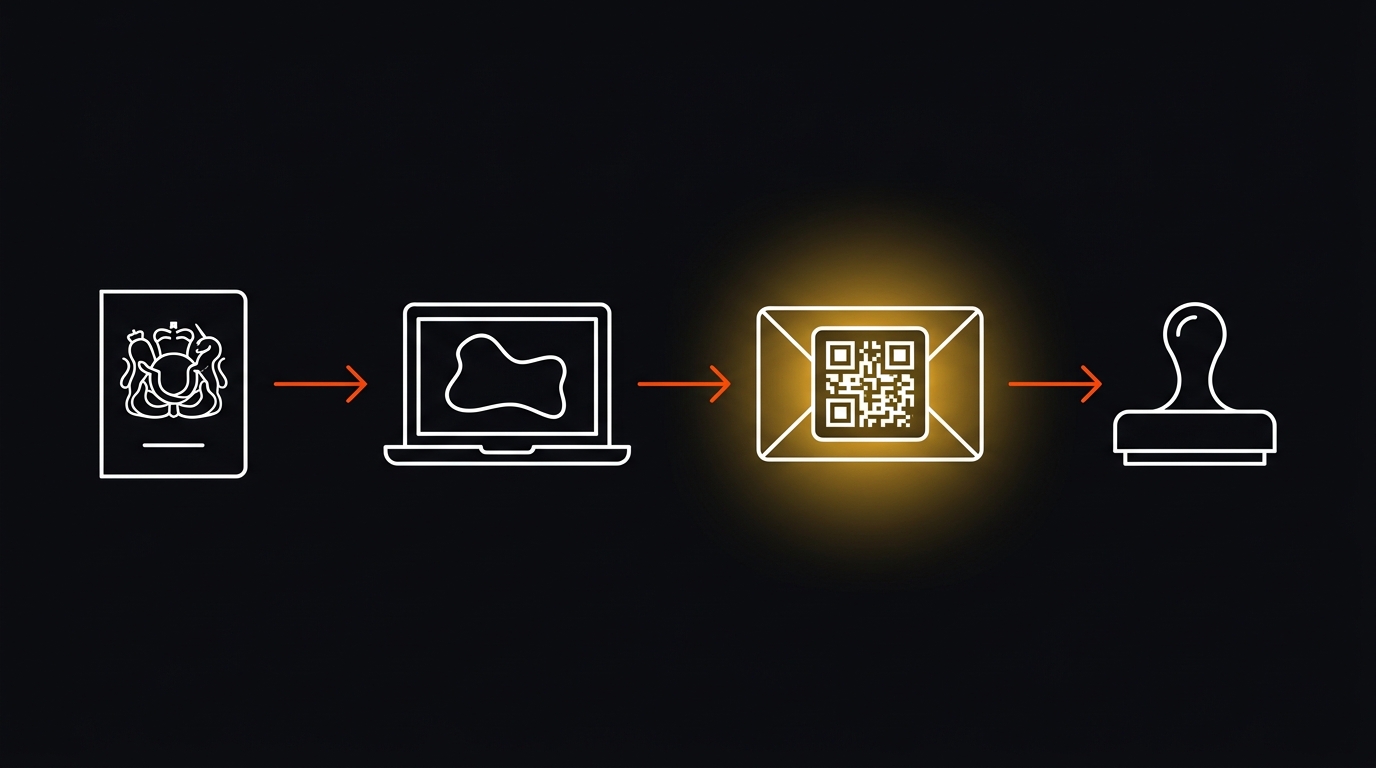
This is the path we run for clients. Follow it in order. Skipping steps does not save time. It just moves the delay later in the chain, usually to a place where you cannot fix it (like the airline check-in desk in Istanbul).
Step 1: Lock In Your Tour Operator and Itinerary First
Do this before you touch the e-Visa portal. The portal asks for a sponsor name, sponsor license number, and a planned itinerary on the first screen. Without a real operator name, the file goes into manual review and you lose two to four weeks. The licensed Afghan operators (there are roughly 35 currently in good standing with the Ministry of Information & Culture) maintain pre-approved client slots that flag your application for the faster track. According to Against the Compass field reporting from January 2026, the difference between a sponsored and unsponsored e-Visa file is roughly two weeks of processing time and a meaningfully lower rejection rate.
The operator gives you three things you cannot get elsewhere: the sponsor reference number, the route confirmation that customs will check on arrival, and the regional travel permits for places like the Wakhan Corridor and Bamiyan that the e-Visa alone does not cover. Do not skip this. Solo travel into Afghanistan in 2026 is not a thing. The visa system is designed around operator sponsorship, and the points of entry enforce it.
Step 2: Gather Documents Before You Open the Portal
The portal session times out aggressively. If you start the form without your documents already scanned and named correctly, you will lose progress and have to restart. Prepare these files in advance, sized under 5 MB each, in PDF or JPG format:
- Passport bio page scan, color, both sides if applicable, valid for at least six months beyond your planned exit date with two blank visa pages.
- Recent passport-style photo, white background, 35x45mm dimensions, taken within the last six months. The portal rejects selfies and any photo with shadow on the face.
- Proof of travel insurance with explicit Afghanistan coverage and medical evacuation. The standard line "worldwide coverage" is not enough. The policy must name Afghanistan or use the phrase "all countries including those under government travel warnings."
- Confirmed onward flight booking (a flight out of Afghanistan or to a neighboring country).
- Hotel reservation or letter of accommodation from your tour operator covering all nights in the country.
- Sponsor invitation letter PDF from your licensed Afghan tour operator.
- Itinerary document listing each city or region you plan to visit with dates.
The portal will ask you to confirm each of these. Mismatches between the itinerary you upload and the route your operator has on file are the most common manual-review trigger.
Step 3: Submit on the MFA Portal
Open the official portal at evisa.mfa.af in a desktop browser. Mobile submissions have been flaky throughout March and April 2026 and we recommend against them. Complete the personal information section, the travel section, the sponsor section, and the document upload section in that order. Save progress at every screen. Pay the fee (Visa, Mastercard, and a handful of regional cards are accepted) and download the receipt.
You will receive a confirmation email with a tracking reference within roughly two hours of submission. If you do not get it within twenty-four hours, the file likely failed to register and you should resubmit. Do not call the embassy to ask. The embassies do not have visibility into the e-Visa pipeline. Only the operator and the MFA portal status page do.
Step 4: Wait, but Wait Smart
Headline processing time is 7 to 10 business days. The reality for Western passport holders applying with operator sponsorship in March and April 2026 has been a median of 18 to 24 days from submission to approval email. Files routed for additional security screening (US, UK, and any applicant flagged for past travel to sensitive countries) average 3 to 5 weeks. We have seen approval in as little as 6 days for repeat clients. We have also seen 38 days for first-time applicants from countries with active diplomatic friction.
Do not book non-refundable flights until your e-Visa PDF is in your inbox. Do not book non-refundable flights until your e-Visa PDF is in your inbox. We are repeating that. According to operator notes shared by Koryo Tours' Afghanistan team in February 2026, roughly 8 percent of clients in their pipeline lost flight money in 2025 because they booked on the optimistic timeline and the visa came in late.
Step 5: Print, Verify, Carry
When the approval email arrives, print the PDF in color, twice. One copy goes in your carry-on. The second copy goes in your checked bag. Take a photo of the PDF and save it to your phone offline. Verify the QR code resolves by scanning it with any QR reader app before you leave for the airport. If the code does not resolve, contact your operator immediately. They have a direct line to the MFA office that the public does not.
The PDF must show a clear QR code, your photo, your full name matching your passport exactly, your sponsor reference, and the validity dates. If anything is mismatched (a missing middle name, a transposed digit), get it corrected before you fly. Border officers do not improvise.
What Customs at Kabul Actually Asks
This section is what most published guides leave out. The e-Visa gets you to the airline counter. The customs interview at Kabul International or Mazar-i-Sharif decides whether you actually walk into the country. Officers in 2026 are trained, professional, and unhurried. They ask three rounds of questions in this order. Be ready for each.
Round One: Purpose
"Why are you visiting Afghanistan?" The answer is "tourism" and nothing else. Do not say "adventure travel," "exploration," or anything that implies off-itinerary movement. Say tourism. Say the name of your operator. Say the cities on your itinerary. Keep it under thirty seconds. Officers have a checklist. Long answers raise flags.
Round Two: Sponsor Verification
"Who is your sponsor?" "What is the operator phone number?" "Who is your guide?" Officers will sometimes call the operator from the customs desk to confirm. Have the operator's primary phone number written on the printed itinerary in your hand. Memorize the operator name. The phone call confirmation is rare in our experience but does happen in roughly one in fifteen client arrivals based on March 2026 data. The operator is awake and ready for the call. That is part of what you paid for.
Round Three: Route and Equipment
"Which provinces will you visit?" "Are you carrying any electronic equipment beyond a personal phone and laptop?" "Are you carrying any cash above $10,000 USD equivalent?" Answer each truthfully and briefly. If you have professional camera gear, declare it now. Do not let customs find it in your bag and ask why you did not mention it. That is the point at which a clean entry becomes a problem.
If you are heading to Bamiyan or the Wakhan Corridor, the officer may ask to see your regional permit. Your operator will have arranged this. The permit is a separate document from the e-Visa. Have it accessible.
What Customs Does Not Ask
Officers do not ask political questions. They do not ask about your religion. They do not ask about social media. They do not search phones routinely. The customs interaction in Kabul in 2026 is procedural, not interrogative. The travelers who run into trouble are the ones who volunteer information, joke around, or behave evasively. Be calm, be brief, be honest. The whole interaction averages four to seven minutes.
Wakhan Corridor and Bamiyan: The Permit Layer the e-Visa Does Not Cover
This is where solo travelers and underprepared groups get stopped. The e-Visa is your entry permit. It says you can be in Afghanistan. It does not say you can be in the Wakhan Corridor, in restricted areas of Bamiyan, or anywhere outside the major cities without an additional regional travel permit issued by provincial authorities.
For the Wakhan Corridor, the relevant office is the Faizabad branch of the Ministry of Information & Culture, with sub-permits issued at Ishkashim by the local district office. Your operator pulls these in advance and carries the originals. The trekking season window for the Wakhan in 2026 is late June to early September, with the snowmelt arriving roughly two weeks later than the historical norm due to the late spring across the Pamir and Hindu Kush. We have written a separate field guide on the Wakhan Corridor expedition window that breaks down the route options.
For Bamiyan, the e-Visa covers the town and the Buddha cliff complex. Side trips to Band-e-Amir National Park and to the high valleys above Yakawlang require a Bamiyan provincial permit, again pulled by your operator. We cover the day trip logistics in our Band-e-Amir lakes day trip guide.
The math is simple: the e-Visa plus an operator-led tour with regional permits gets you everywhere a tourist is currently allowed in Afghanistan. The e-Visa alone gets you Kabul, Mazar, Herat, and Bamiyan town center. Anything beyond that without the regional layer is illegal travel and gets you turned around at the first provincial checkpoint, of which there are many.
Common Mistakes That Get People Turned Around at Boarding
These are the recurring failure patterns we see across our pipeline and across the wider operator community in spring 2026.
-
Printing the e-Visa in black and white. The QR code reads fine but the photo and watermark do not. Officers reject grayscale prints. Color only.
-
Booking flights before the PDF arrives. The processing window is unpredictable. Buy refundable tickets or wait until you have the PDF in hand.
-
Mismatched name on the form. If your passport says "John David Smith" and the e-Visa says "John Smith," the airline will refuse boarding in Istanbul, Dubai, or Doha. Match exactly.
-
Travel insurance that does not name Afghanistan. Border officers and airline staff both check this. "Worldwide" is insufficient. The policy document must explicitly include Afghanistan.
-
Carrying drone, satellite phone, or professional broadcast gear under the tourist visa. This is a customs violation. File for the appropriate visa class or leave the gear at home.
-
Trying to enter overland from Pakistan or Tajikistan without a sponsored route. The land borders enforce the e-Visa plus regional permit combination strictly. The Torkham crossing in particular has refused entry to multiple unsponsored Western travelers in early 2026.
-
Lying about the itinerary. Officers cross-reference what you say to them against what your operator submitted. Stick to the itinerary on file.
What This Means for Your 2026 Trip
The e-Visa is a real upgrade. It compresses what used to be a forty-five day embassy ordeal into a two to three week online process. It eliminates the need to ship your passport. It works with the same operator sponsorship system that has been the backbone of Afghanistan's tourism reopening since 2022. It does not eliminate the underlying security screening, the regional permit requirements, or the customs interview at the airport. Treat it as the new front door, not as a deregulation.
If you are planning a Bamiyan or Wakhan trip for summer 2026, start the e-Visa process at least eight weeks before your intended departure date. That gives you a buffer for the median 18 to 24 day processing window, plus time to coordinate the regional permits, plus a margin for the unexpected delay that always happens with at least one applicant in every group. Lock in your operator first. Submit the e-Visa second. Book flights third. Print the PDF in color. Carry the operator phone number. Answer customs in thirty seconds. That is the system.
For a deeper read on the country's tourism trajectory and what 9,500 visitors in a single year actually means on the ground, see our 2026 travel boom data analysis. For the on-the-ground reality of what a guided expedition looks like end to end, our case study in responsible extreme tourism walks through a complete Bamiyan and Wakhan run from arrival to exit.
Afghanistan is open in a way it has not been since the early 1970s. The door is real. The paperwork is real. The customs officer at Kabul is real. Treat each one with the seriousness it deserves and you will find yourself standing on a high-altitude pass in the Pamir at golden hour, watching a horseman move through dust and light, wondering why nobody told you it would be like this. The e-Visa is just how you get there.